
El Chiflón, where a river comes down in blue steps
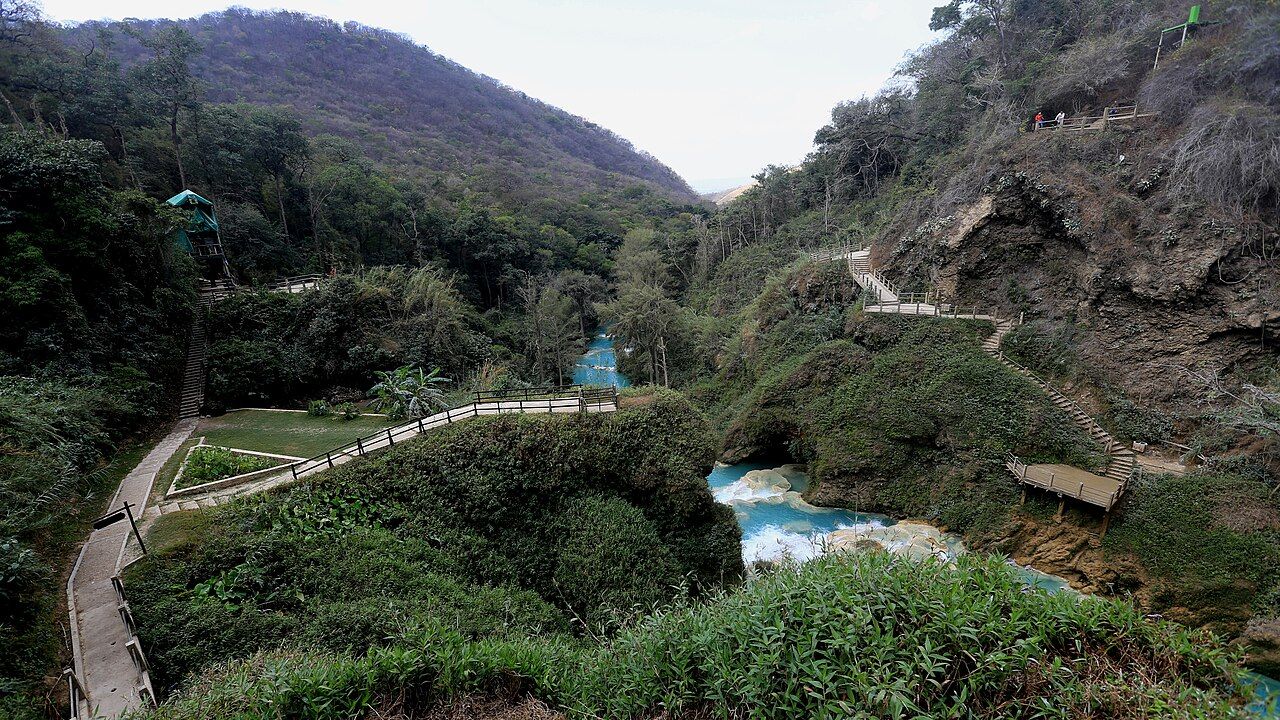
South of Comitán a river drops through a wooded gorge in a stair of pale blue pools and white falls, with a long path climbing beside it to the tallest drop of all.
- From the zócalo
- About three hours by road
- Altitude
- Lowlands
- Getting there
- Road via Comitán, then a side turn
- Bring
- Swimwear, grippy sandals, water, sun hat, a dry bag
 Shot by panza-rayada · licence CC BY-SA (source file)

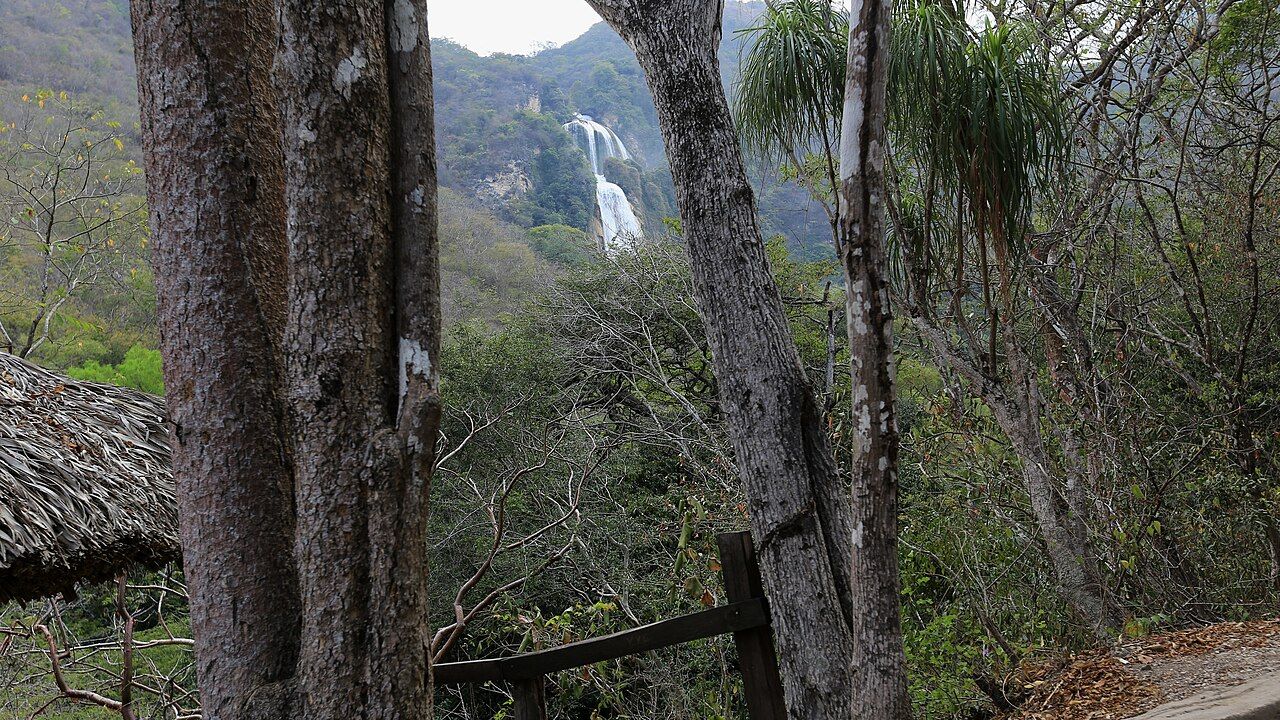
Most day trips from San Cristóbal ask you to look at something old. El Chiflón asks you to look at water. The San Vicente river, running down from the plateau around Comitán toward the warmer valleys of the south, falls through a narrow wooded gorge in a series of cascades and pools, and the minerals it carries tint the water a milky turquoise that seems almost painted on. At the head of the gorge it plunges in one long white drop, the Velo de Novia, the bride's veil, and the spray from it drifts down the valley like weather.
The falls lie near the small town of Tzimol, well south of the highlands, and the change in climate is part of the outing. You leave San Cristóbal in a jacket and arrive somewhere that feels close to the tropics: dry forest, palms, cicadas, a sun that means business by late morning. Plan the day around that contrast.
Getting down from the highlands
The usual route runs southeast along the Pan-American Highway to Comitán, a calm colonial town in its own right, and then turns off toward the falls on smaller roads. Allow around three hours each way by road, longer with stops, and more if the traffic around Comitán is slow. Many visitors pair El Chiflón with a night in Comitán and the Montebello lakes the next day, since both lie in the same corner of the state.
If you travel by public transport, you can reach Comitán by bus or shared van and continue from there by local transport or taxi toward Tzimol. Without a car the day becomes long, so an early start matters.
The path up the gorge
The falls sit inside a park run by people from the surrounding communities, who maintain the paths, staircases, viewpoints and simple facilities. From the entrance a well-built path climbs beside the river, crossing small bridges and passing one pool after another, each a slightly different shade of blue depending on depth, light and the season.
 Shot by panza-rayada · licence CC BY-SA (source file)

The walk to the foot of the main fall takes most people somewhere between thirty minutes and an hour at an easy pace, with plenty of excuses to stop. It is uphill all the way and the last stretch steepens, with staircases that can be wet and slippery from the spray. Good footwear helps far more than speed. Viewing platforms at several points let you look back down the chain of cascades, and the higher you go the louder the roar of the Velo de Novia becomes.
Near the top, the spray is heavy enough to soak you in minutes on a windy day. Some people welcome that in the midday heat; anyone carrying a camera or phone should keep a dry bag or plastic cover handy. The rocks close to the base of the fall are slick, and the safe vantage points are the marked platforms rather than the boulders below them.
Swimming where it is allowed
Part of the pleasure of El Chiflón is getting into the water. Swimming is permitted in designated pools along the lower and middle river, which are usually marked and sometimes supervised, while other stretches are off limits because of currents, depth or the force of falling water. Follow the signs and the instructions of park staff: the rules exist because the river is stronger than it looks, especially after rain.
The water is cool rather than cold, a pleasant shock after the climb. The pools have uneven, sometimes sharp mineral edges, so water shoes or sturdy sandals save your feet. Leave sunscreen off before swimming if you can, or use as little as possible; the river runs on to farms and villages downstream, and the blue colour that draws everyone here depends on the water staying clean.
Changing areas and toilets are basic. Bring a towel, a change of clothes and enough drinking water for the climb, because the heat in the lower valley builds quickly through the morning.
Also in the valley: The Sumidero Canyon, from the river and the rim
Why the colour changes with the seasons
The turquoise is at its most vivid in the dry months, roughly from late winter into spring, when the river runs low and clear and the dissolved minerals give the pools their pale, milky blue. Once the rains arrive, usually from around May or June, the river swells and carries silt from the hills, and the water can turn green, grey or even a muddy brown for days or weeks at a time. The falls are more powerful then and the roar more impressive, but the postcard colours fade.
Heavy rain can also close the swimming areas or parts of the path, and on rare occasions the whole park, so in the wet season it is worth asking about conditions before you make the drive. Late in the rains and into the early dry season, the water often clears gradually, and the forest around the gorge is greener than at any other time of year.
There is no wrong month, only a different visit. Choose the dry season for colour and swimming; choose the wet season for volume and fewer people; and avoid the main national holidays if you want the paths to yourself, since families from across the region come here on long weekends.
Heat, sun and timing the day
El Chiflón sits far lower than San Cristóbal, and the difference catches visitors out. A sunny morning in the highlands at about 2,200 metres feels mild; the same sun over the gorge, much lower down, is fierce. A hat, sunscreen and a long-sleeved shirt for the walk make the climb more comfortable, and drinking water before you feel thirsty helps more than any amount of fruit at the top.
Arriving early has three advantages: cooler air on the climb, softer light on the pools, and fewer people at the viewpoints. By early afternoon the lower pools fill with swimmers, especially at weekends. If you come with children, the lower stretch of the river offers easy walking and shallow water, and nobody needs to reach the top to have a good day.
Food stalls near the entrance sell simple meals and snacks, and some visitors bring a picnic. Whatever you carry in, carry out again: there are bins, but litter in a river gorge has nowhere to go but downstream.
Fitting it into a trip
As a day trip from San Cristóbal, El Chiflón is long but manageable, and it makes a good contrast with the quieter highland outings closer to town, such as the river arch at Arcotete. As part of a loop through the south of the state, it fits naturally beside Comitán and the lakes, with a slower pace and an extra night.
The trip also shows you how varied Chiapas is within a few hours of driving. The highland pine forest gives way to dry slopes, then to sugar cane and maize in the warm valleys, and the language of the villages changes along the way. Before you go, it helps to read a little on altitude, weather and getting around, since the same day can take you from cold mist to midday heat.
- Start early, ideally leaving town soon after dawn.
- Carry cash for the entry fee and small purchases.
- Swim only in the marked pools, and only when they are open.
- Expect cloudier water in the rainy months, and check conditions after storms.
Camera work: Christopher Javier Cuenca García · licence CC BY-SA (source file); Rod Waddington · licence CC BY-SA (source file); Noche de la pena · licence CC BY-SA (source file)


