
Arcotete and the Rancho Nuevo caves, two half days out of town
Close to San Cristóbal, a river has carved a stone arch through a forested hill, and a show cave runs deep into the limestone south of town: easy outings for a free morning.
- From the zócalo
- About twenty minutes by road
- Altitude
- Highlands
- Getting there
- Short taxi or colectivo ride from town
- Bring
- Warm layer, good shoes, cash, a small torch
 Shot by Noche de la pena · licence CC BY-SA (source file)

Not every outing from San Cristóbal needs a long drive. Two of the easiest lie within a short ride of the centre: the natural arch at Arcotete, where a river passes through a limestone hill in pine forest, and the caves at Rancho Nuevo, a show cave south of town where a walkway leads into the rock. Either fits into half a day, and together they make a relaxed full day that never takes you far from a warm meal and a jacket.
Both belong to the same landscape. The valley around town sits on limestone, and water has spent a very long time dissolving it: sinkholes, springs, underground rivers and caves are scattered across the highlands. Arcotete shows that process in daylight; Rancho Nuevo shows it underground.
Arcotete: the river and its arch
Arcotete lies a short distance east of San Cristóbal, reached by a minor road through farmland and forest. The name is usually explained as coming from arco, Spanish for arch, and the arch is the reason to go: a broad span of rock through which a stream flows, with trees growing on top and moss on the walls. You can walk down to the water and look up through it, and on clear mornings the light falls through the opening in long shafts.
The site is managed as a small ecotourism park by the local community, with an entry fee, paths, picnic areas and a few simple stalls. At weekends families from town come for the day, and you may find activities such as zip lines or short rope walks offered alongside the arch; on weekdays it is often very quiet. Fees and what is open change.
Paths lead along the river and up the hillside through pine and oak, with views back over the valley. They are short, but some sections are steep and muddy after rain. Wear shoes with grip, and keep children close to the water, which runs faster under the arch than it looks.
Old buildings along the way
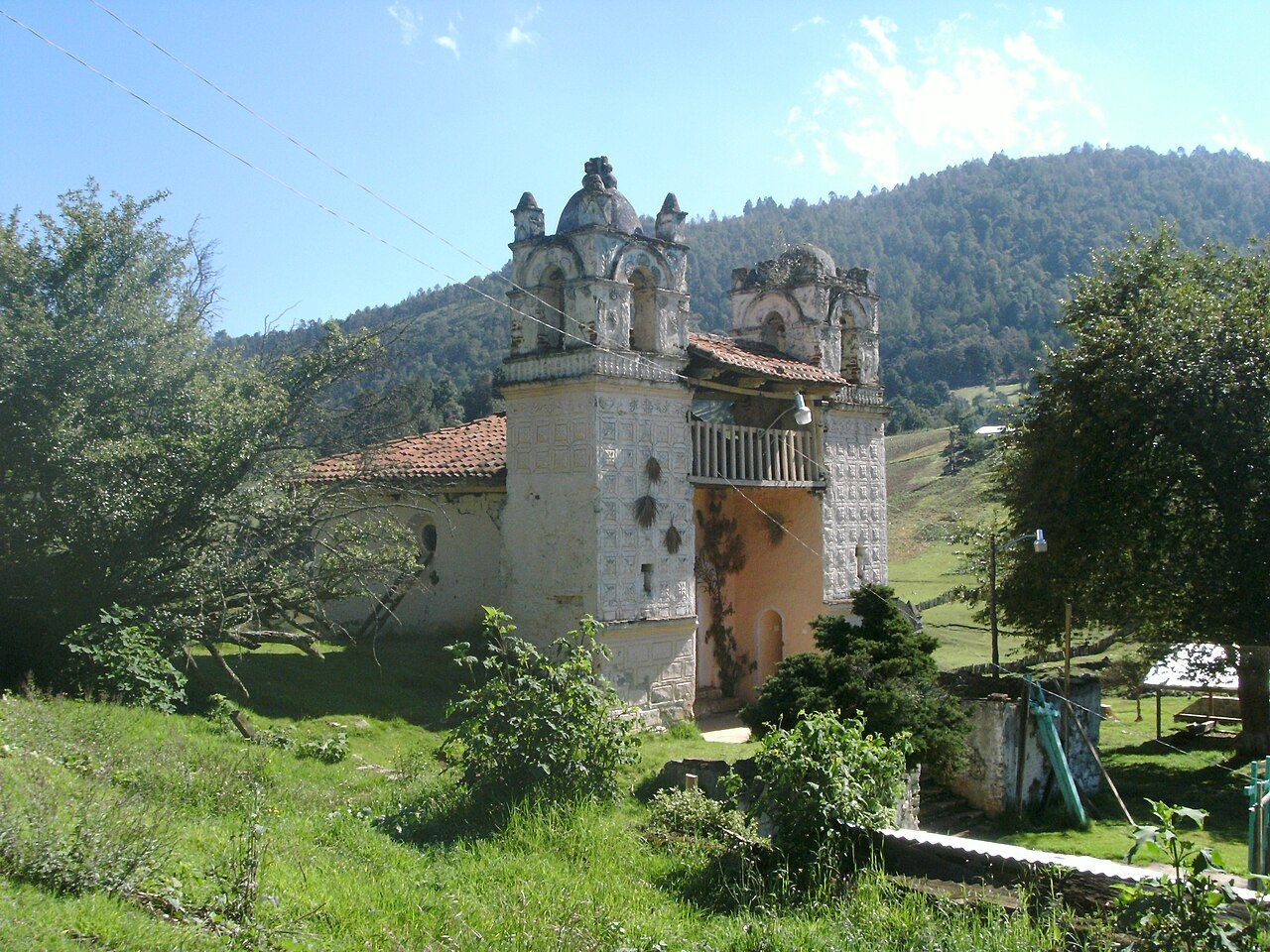
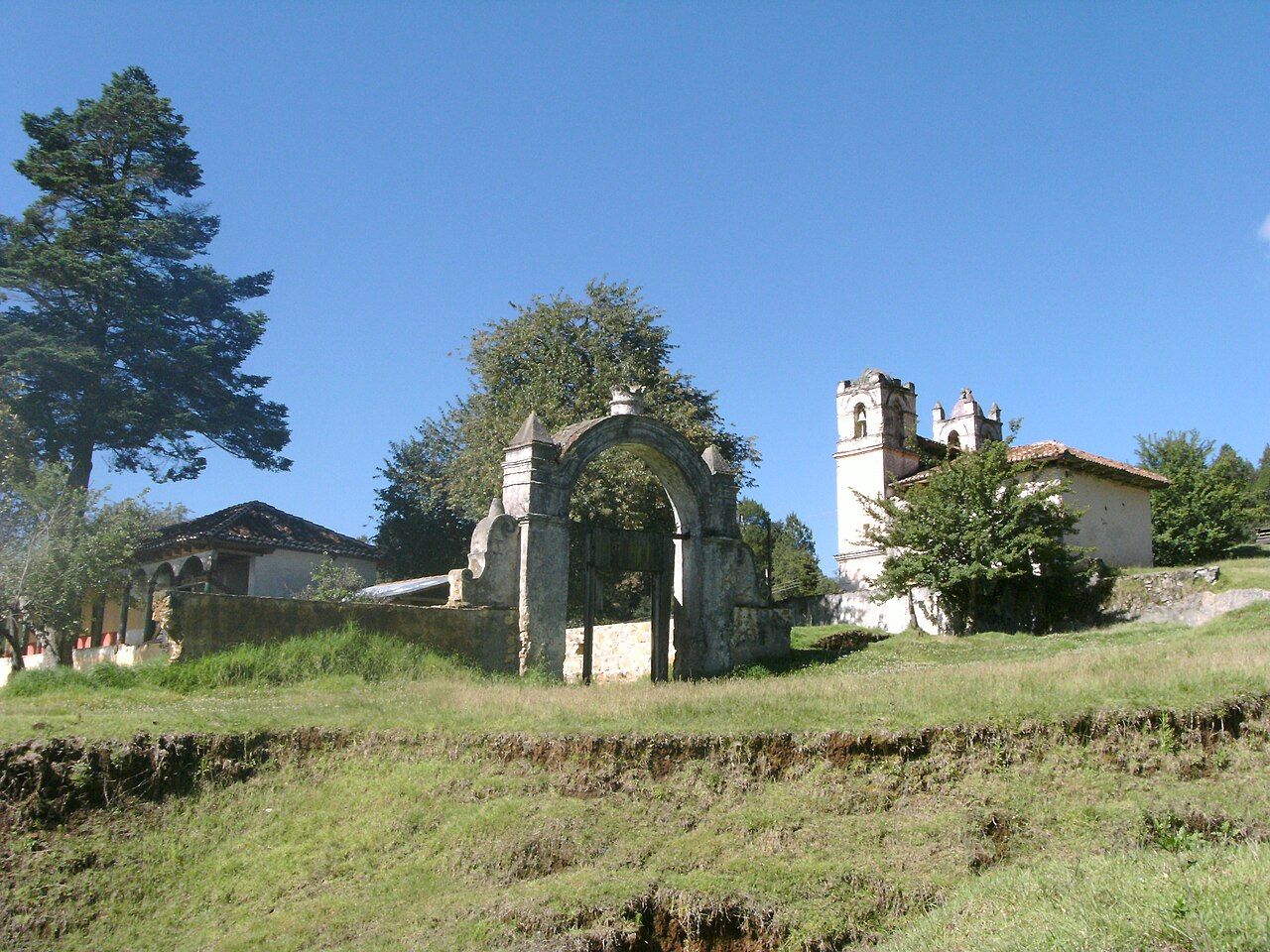
The countryside around Arcotete holds more than the arch. On the approach you can see an old chapel with tiled roofs and carved bell towers, a stone gateway and whitewashed walls, standing in green fields below the forested hills. Buildings like these are scattered across the valley, many of them older than most of the houses in town.
 Shot by Noche de la pena · licence CC BY-SA (source file)

If you stop to look, keep in mind that rural chapels and the land around them belong to people and communities. Admire from the road or the gate unless someone invites you in, and ask before photographing anyone working nearby.
Also in the valley: Two hill churches and the stairways that reach them
Rancho Nuevo: a show cave in the forest
The Rancho Nuevo caves, often signed as the Grutas de San Cristóbal, lie southeast of town just off the highway toward Comitán. The entrance sits in a forested park with pines, picnic tables and walking paths, and a lit walkway leads a long way into a high, narrow passage in the limestone. Stalactites, stalagmites, flowstone and dripping formations line the route, and the deeper you go, the quieter and cooler it becomes.
The walkway is raised and fairly easy, with railings along most of its length, though it can be damp and slippery. The lighting is functional rather than theatrical, so a small torch helps if you want to look closely at the rock. Do not touch the formations: they grow very slowly, and oils from skin can stop them growing at all.
The cave park is managed locally and charges an entry fee. It sits near a military base that shares the Rancho Nuevo name, which you pass on the highway; this is a normal part of the landscape and not a reason for concern, but do not photograph military installations.
Routes to Arcotete
Both places are short taxi rides from town, and shared vans run along the main roads for part of the way. For Arcotete, a taxi is the simplest option, and you can arrange a pick-up time or ask the driver to wait; for Rancho Nuevo, shared vans heading south along the highway can drop you at the turn-off, from where it is a short walk to the cave entrance. Agree the fare before you get into a taxi.
Cyclists sometimes ride to Arcotete on the quieter roads; the climb back toward town is moderate, but traffic and the altitude both deserve respect. Walking there from the edge of town is possible for strong walkers, but much of the route follows roads, so a ride makes more sense for most people.
Mornings are usually the best time for both. The light is clearer, the paths drier, and the sites quieter before the weekend picnickers arrive. In the rainy season, roughly from late spring into autumn, afternoon storms are common, and the river at Arcotete can rise and turn brown after heavy rain.
Combining the two
A comfortable plan is Arcotete in the morning, back to town for lunch, and the caves in the afternoon, or the reverse if the weather looks better early. The outings make a gentle introduction to the countryside before longer trips, and they pair well with the town's hill walks: after the arch, climbing to the two hill churches gives you the valley from above.
For a bigger change of scene, the long day to the Montebello lakes shows the same limestone country on a much grander scale, with lakes filling the sinkholes.
- Take a warm layer for the cave, where it stays cool all year.
- Carry small cash for entry fees and snacks.
- Stay on the paths and walkways at both sites.
A quieter way to see the valley
Neither Arcotete nor Rancho Nuevo is grand, and that is part of their appeal. They give you the forest, the river and the rock at a human scale, close enough to town that you can go when the weather is good and stay as long as you like. On a free morning between longer trips, they are an easy way to remember that San Cristóbal sits in a valley shaped by water, and that the hills around it hold more than churches and markets.
Camera work: Christopher Javier Cuenca García · licence CC BY-SA (source file); panza-rayada · licence CC BY-SA (source file); Rod Waddington · licence CC BY-SA (source file)


