
The Sumidero Canyon, from the river and the rim
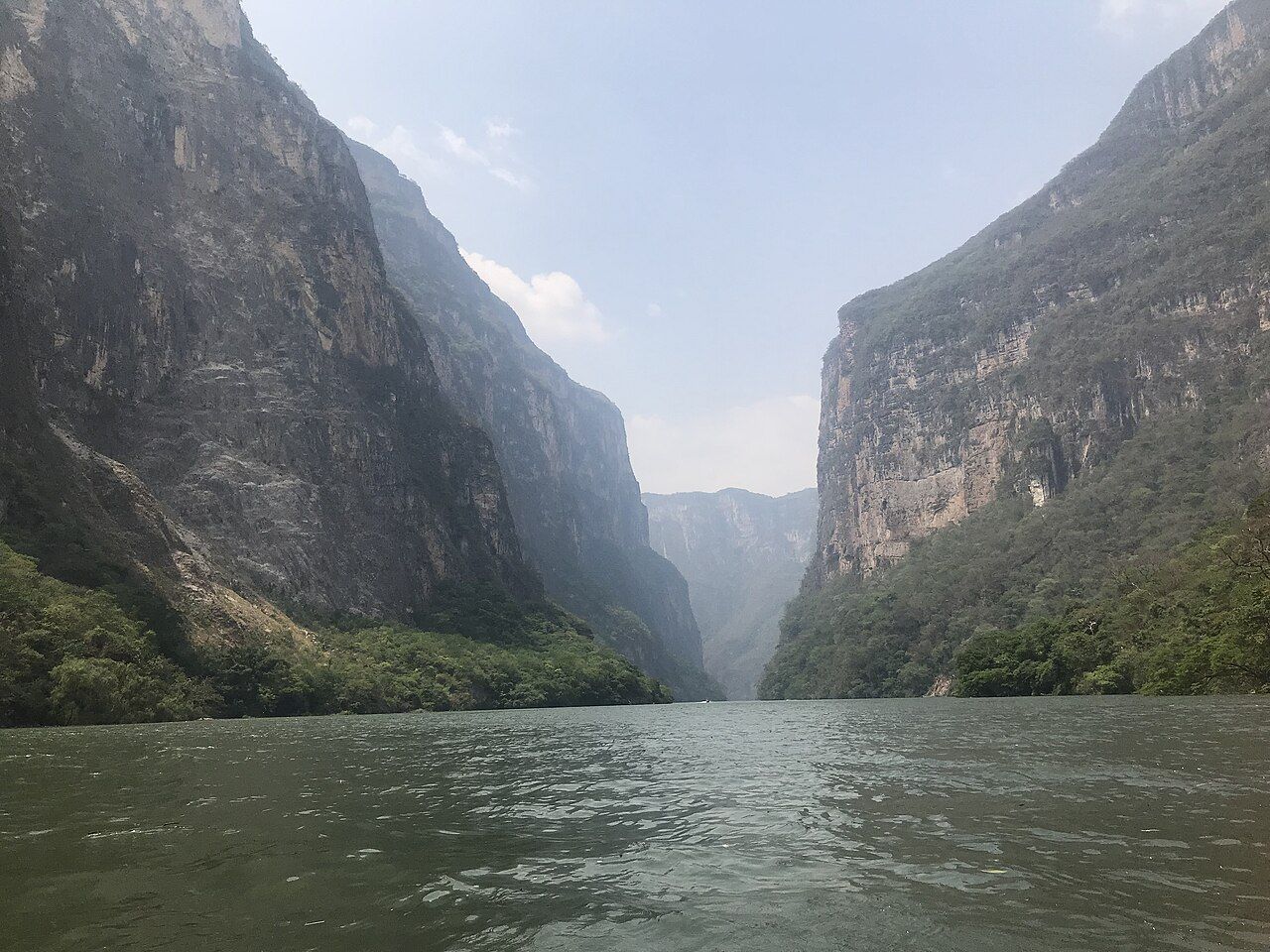
Below the highlands, the Grijalva runs between limestone walls that rise about a kilometre above the water. See the canyon from a boat, then from the lookouts on its rim, and you understand its scale.
- From the zócalo
- About an hour by road
- Altitude
- Lowlands
- Getting there
- About an hour by road to Chiapa
- Bring
- Sun hat, sunscreen, water, a light jacket
 Shot by Christopher Javier Cuenca García · licence CC BY-SA (source file)

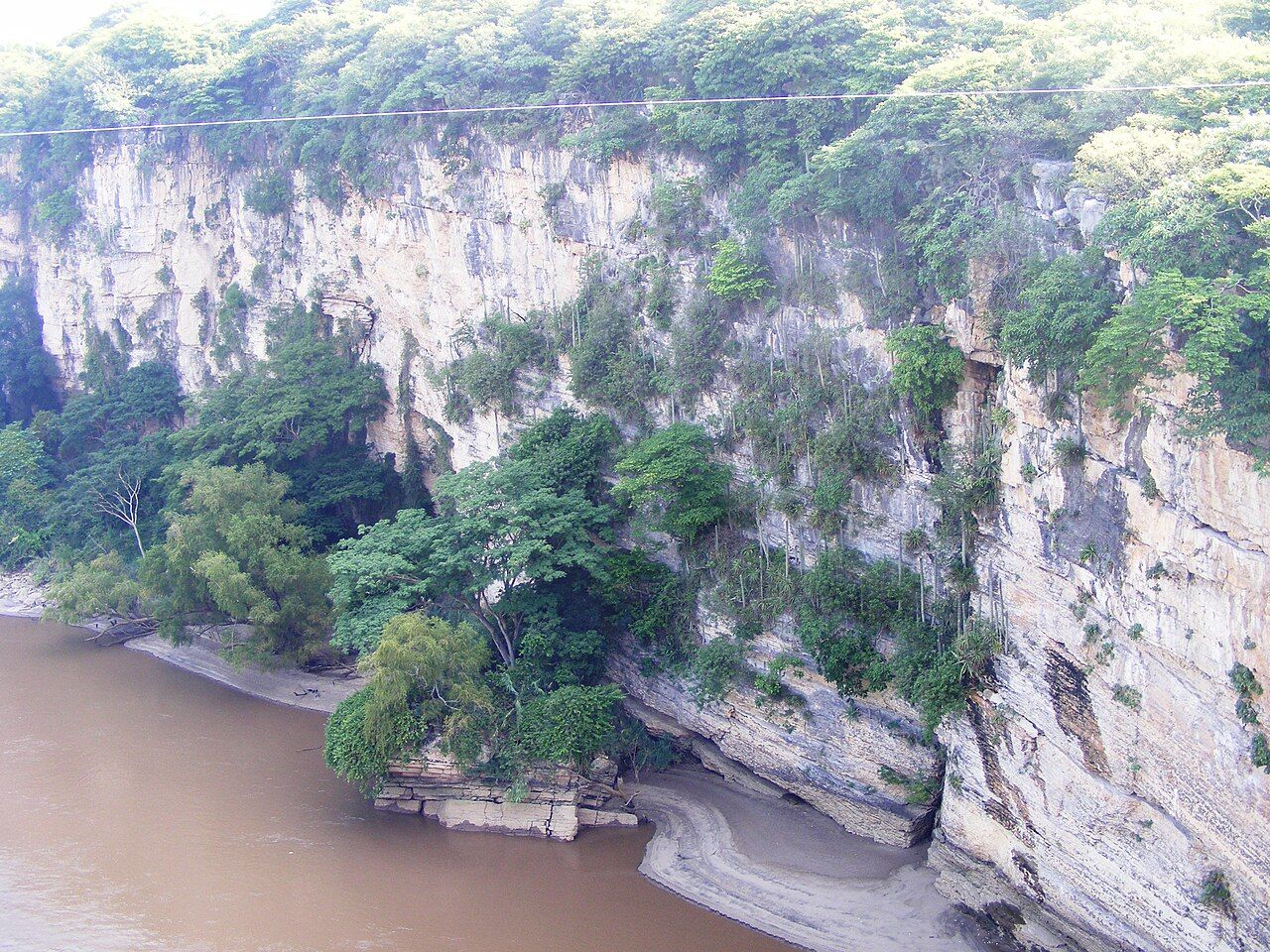
Leave San Cristóbal heading west and the road drops steeply out of the pine-clad highlands into hot, dry country. Below lies the valley of the Grijalva, one of the great rivers of southern Mexico, and just north of Tuxtla Gutiérrez the river cuts through a range of limestone hills in a deep, narrow gorge. This is the Sumidero Canyon, protected as a national park, and its cliffs rise in places to around a kilometre above the water.
The canyon can be seen in two ways: from below, on a boat trip along the river, and from above, at a series of viewpoints on the rim. Both are worthwhile, and together they make a full day out from San Cristóbal.
A river in a gorge
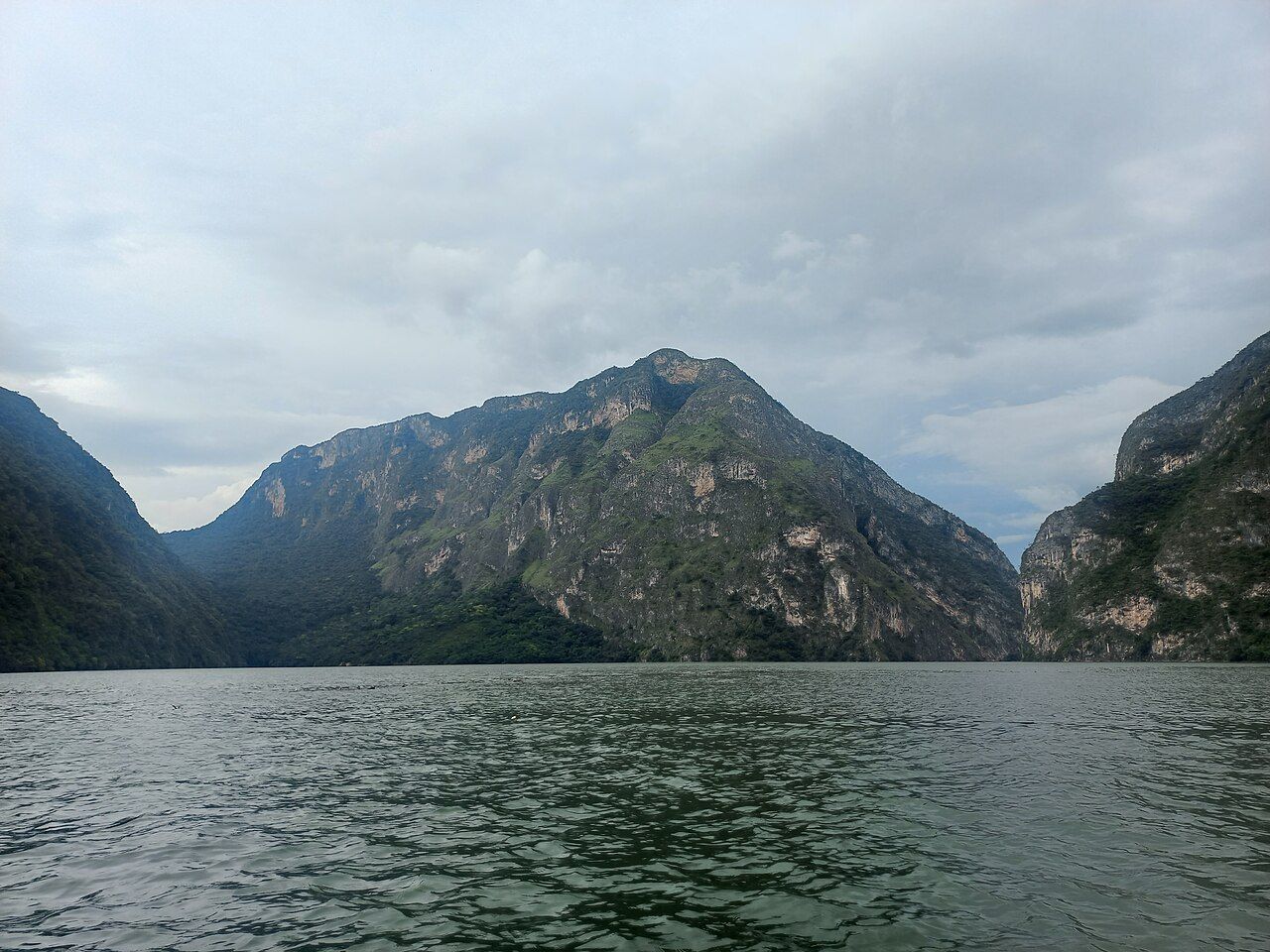
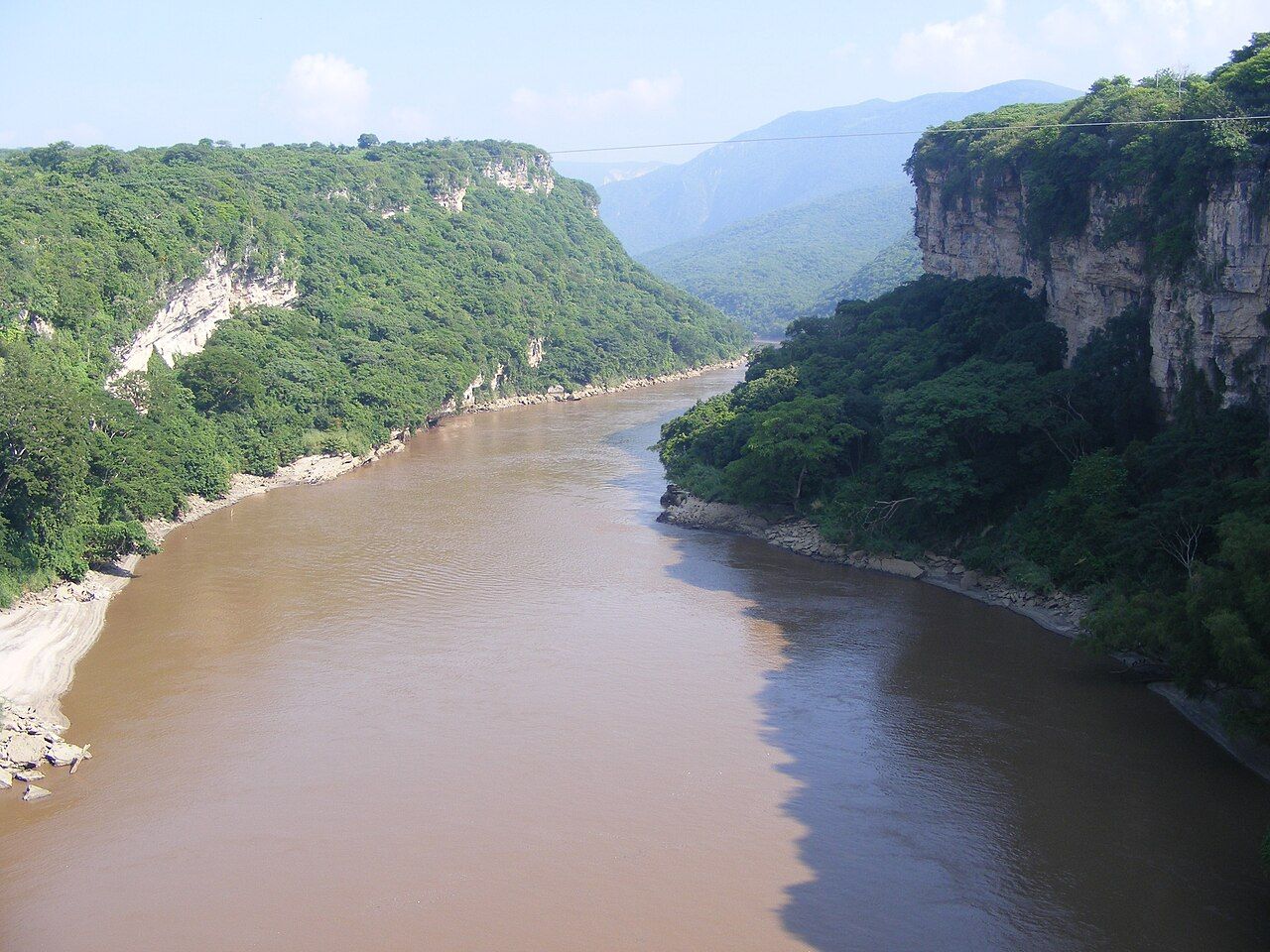
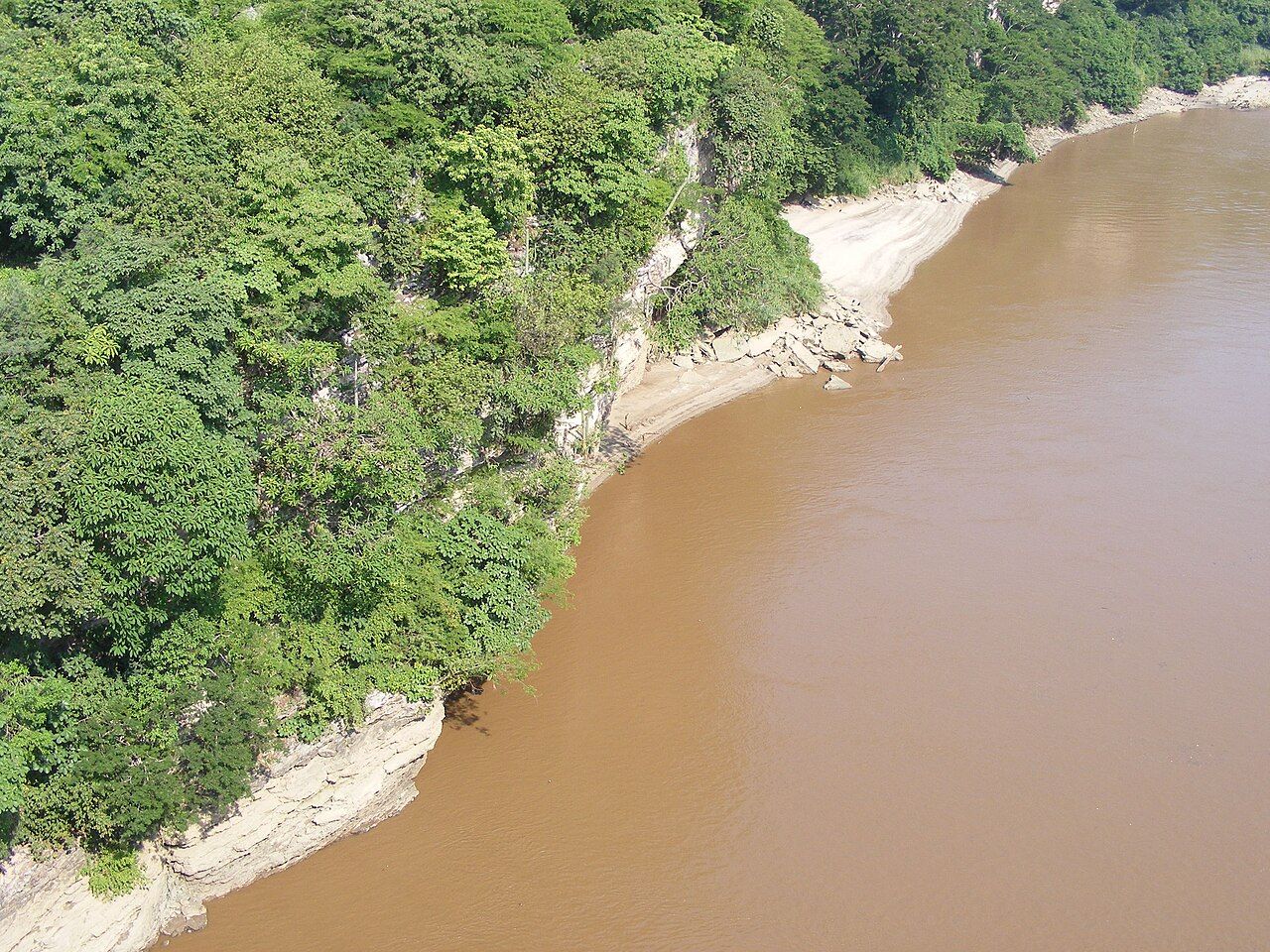
The Grijalva rises in the highlands of Guatemala and flows through Chiapas and Tabasco to the Gulf of Mexico. In the Sumidero, it has carved its way through the uplifted limestone to form a canyon many kilometres long, with sheer walls on both sides. A hydroelectric dam at the northern end, at Chicoasén, holds back the water, so the river through the canyon is now more like a long, still reservoir than a fast-flowing stream.
The rock is pale grey and buff, streaked with darker stains where water seeps down, and the cliffs are cut by ledges and caves. Vegetation clings wherever it can: dry tropical forest on the gentler slopes, cacti and agaves on the exposed rock, and dense green growth at the water's edge.
 Shot by b.jars · licence CC BY-SA (source file)

The canyon has a dramatic place in local memory. A widely told story holds that at the time of the Spanish conquest, people of the region chose to throw themselves into the gorge rather than submit. Historians debate the details, but the story is part of how the canyon is understood in Chiapas.
By boat from Chiapa de Corzo
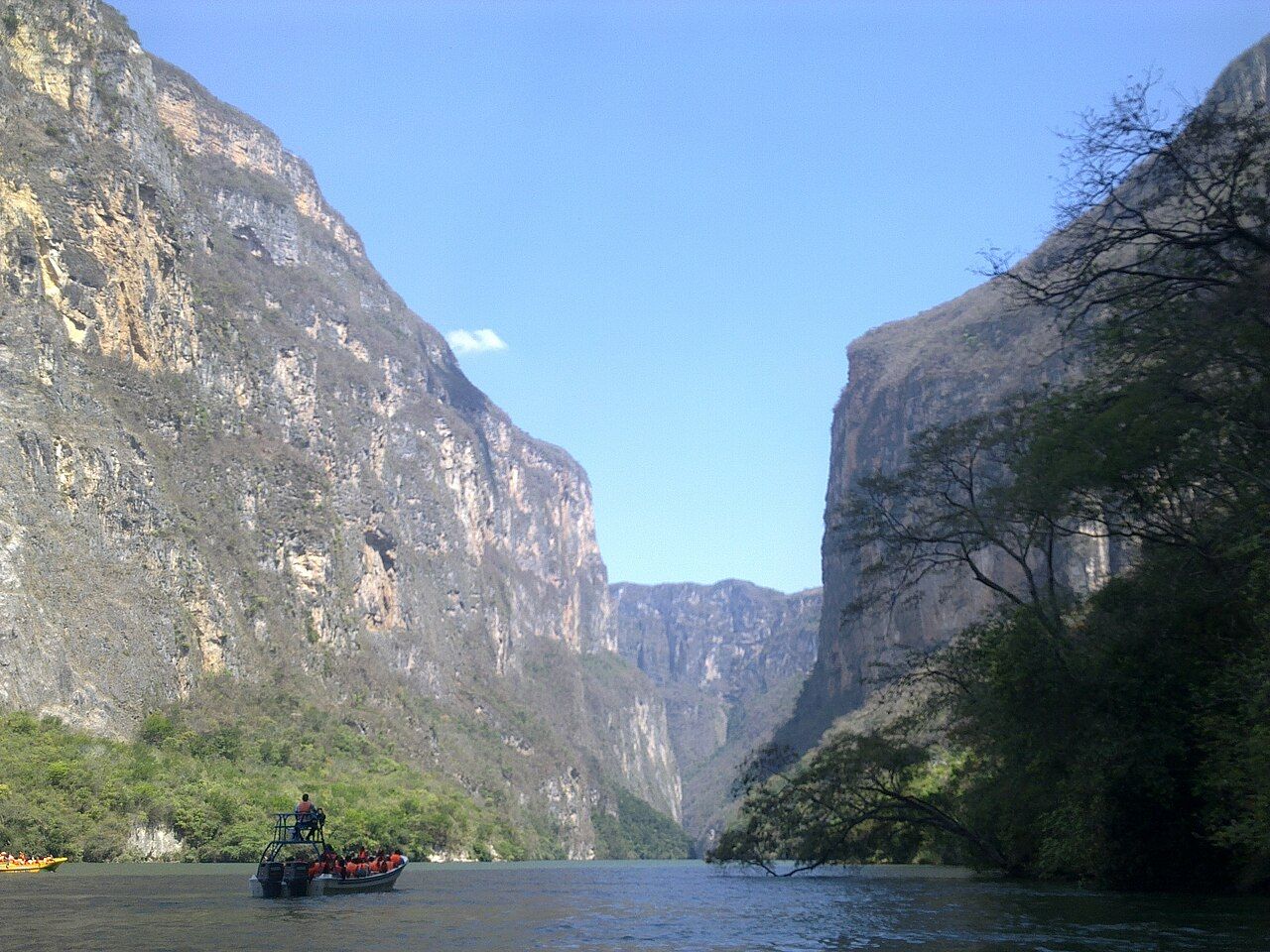
Most visitors see the canyon from the water. Boat trips run upstream from the riverside at Chiapa de Corzo, a colonial town on the Grijalva a short distance east of Tuxtla Gutiérrez, and from a landing near the main road bridge. Typical boats are open launches carrying a group of passengers, with a pilot who stops at the main features and points out wildlife. Life jackets are provided and should be worn.
Trips usually take a couple of hours there and back, travelling as far as the dam at the northern end before returning. The boats move fast between stops, and the wind and spray can be cold even in a hot climate, so a light jacket is useful. In the dry season the sun on the water is fierce: bring a hat, sunscreen and water.
 Shot by Sasha India · licence CC BY-SA (source file)

Along the way, boats typically pause at several well-known sights. One is a mossy cliff where seeping water and plant growth have formed a shape that people compare to a Christmas tree. Another is a cave in the rock wall that holds a shrine to the Virgin of Guadalupe. In places the walls close in so tightly that the sky narrows to a strip far overhead.
Schedules, prices and departure points change, and boats may not run when the river is very high or during certain events. If you are prone to seasickness, choose a seat near the back, where the ride is smoother.
Also in the valley: Toniná, a Maya city built as a stairway
Crocodiles, monkeys and birds
The canyon is home to a good range of wildlife, and seeing some of it is part of the appeal of a boat trip. American crocodiles bask on the muddy banks and logs at the water's edge, sometimes surprisingly close to passing boats. Spider monkeys move through the trees on the lower slopes, though they can be hard to spot. Birds are easier: herons and egrets along the shore, cormorants on the rocks, vultures circling the cliffs, and in some seasons pelicans on the water.
Wildlife sightings depend on the season, the time of day and luck. Early boats generally offer the best chances. Keep your hands inside the boat near crocodiles, never feed animals, and let the pilot decide how close to go.
Keep your hands inside the boat near crocodiles, never feed animals, and let the pilot decide how close to go.
The miradores on the rim
Seeing the canyon from above gives a completely different impression. A scenic road climbs from the edge of Tuxtla Gutiérrez into the national park and runs along the western rim, with a series of viewpoints, or miradores, looking down into the gorge. From the highest of them, the river appears as a thin ribbon far below, and the boats are tiny specks.
The viewpoints are reached by car or taxi; public transport along the rim road is limited. The road can be closed at times, and some viewpoints have railings and paths while others are more exposed, so watch children and keep back from unguarded edges.
If you have a full day, many visitors find that combining a morning boat trip with an afternoon at the miradores is the best way to understand the canyon's scale.
The rubbish problem, told honestly
The Sumidero has a well-known problem with floating rubbish. Plastic bottles, bags, polystyrene and other waste are carried into the river from towns and cities upstream, especially after heavy rains, and the dam holds it back so that it collects inside the canyon. At times, rafts of debris build up against the walls or across sections of the river.
Clean-up campaigns remove large amounts, and conditions vary a great deal: on many days the water is fairly clear, while after storms the rubbish can be striking. It is worth knowing about before you go, so that you are not surprised. The best response as a visitor is a simple one: take all your own waste away with you, and avoid buying single-use plastic where you can.
 Shot by Nacasma · licence CC BY (source file)

Chiapa de Corzo and planning the day
Chiapa de Corzo makes a pleasant stop before or after the boat trip. The colonial town sits beside the river and has a large central plaza with an old brick fountain in Mudéjar style, a large church, and a lively riverside. In January the town holds a major traditional festival, the Fiesta Grande, with dancers in carved masks; dates and programmes vary.
 Shot by Nacasma · licence CC BY (source file)

From San Cristóbal, Chiapa de Corzo is around an hour away by road, depending on traffic and the route taken. Buses and shared vans run between San Cristóbal and Tuxtla Gutiérrez, and onward connections reach Chiapa de Corzo. Many visitors also join organised day trips that combine the boat ride, the town and the miradores. The guide to altitude, cold nights and getting there covers the main road between the highlands and the lowlands.
 Shot by Nacasma · licence CC BY (source file)

The climate in the canyon is very different from that of San Cristóbal. Chiapa de Corzo lies far lower, and it is hot most of the year, especially from March to May. Dress for the heat, but keep a warm layer for the drive back up into the highlands, where evenings are cold. If you enjoy water and scenery, the turquoise pools of El Chiflón and the Montebello lakes make good further trips from San Cristóbal, though both are further away.
Camera work: panza-rayada · licence CC BY-SA (source file); Rod Waddington · licence CC BY-SA (source file); Noche de la pena · licence CC BY-SA (source file)


