
Toniná, a Maya city built as a stairway
Near Ocosingo, a Maya city rises up a hillside in stacked stone terraces, crowned by temples and decorated with stucco, and its visitors are few enough that the climb often feels private.
- From the zócalo
- Several hours by road
- Altitude
- Lowlands
- Getting there
- Road to Ocosingo, then a short drive
- Bring
- Sun hat, water, good shoes, cash, light rain jacket
 Shot by Dge · licence CC BY-SA (source file)

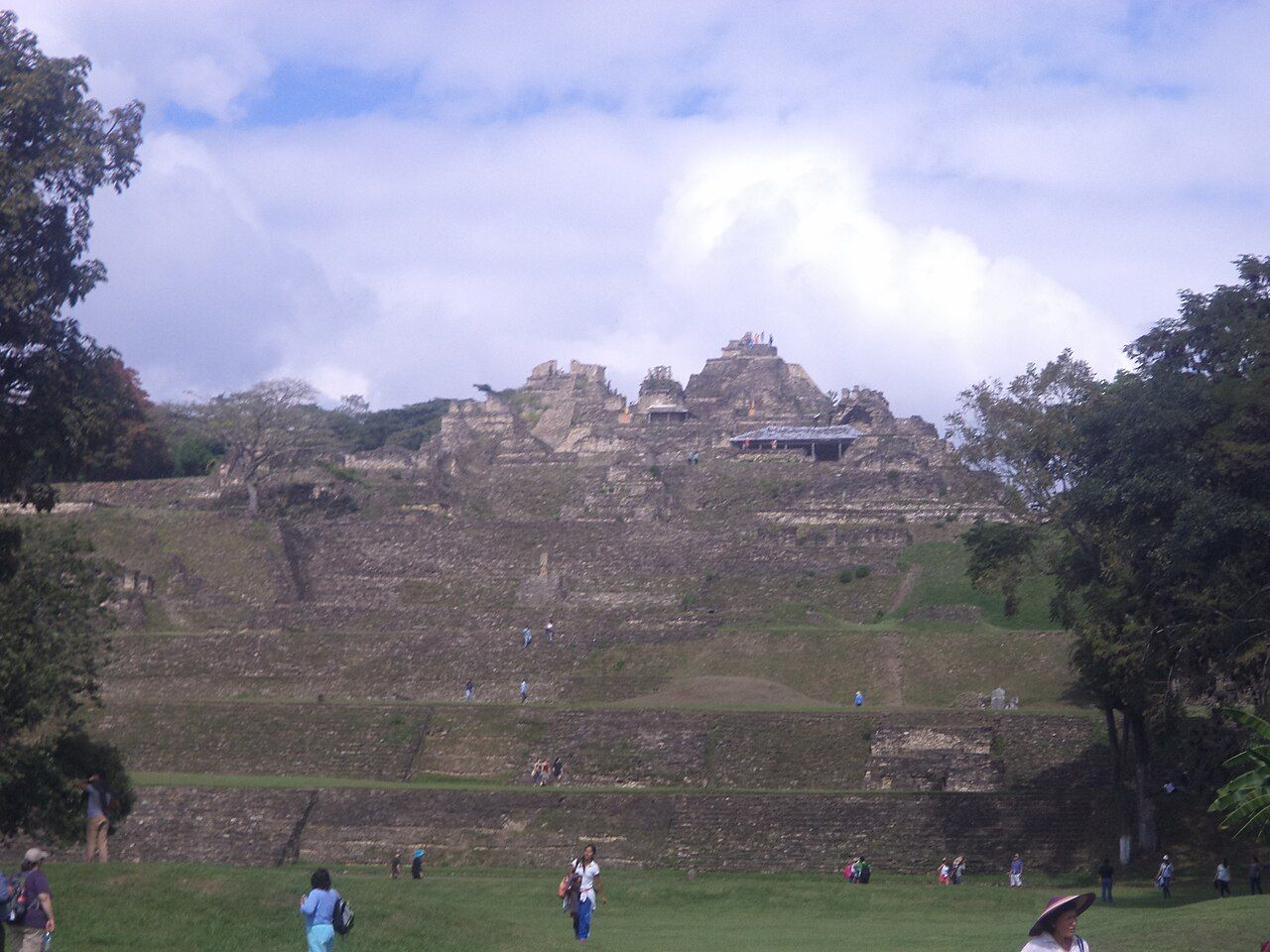
Many Maya cities spread across a plain, with plazas and temples arranged around open space. Toniná goes up. Built on the side of a hill above the valley of Ocosingo, its main structure is a single acropolis of terraces stacked one above the other, rising so far that the top temples seem to belong to the sky rather than the ground. From the plaza at the bottom, the people climbing the terraces look tiny, and that sense of scale is the first thing that stays with you.
Toniná sees only a fraction of the visitors that go to Palenque, and that is its great quality. You can spend a morning here and share the site with a few groups and the birds.
Where it is and how to get there
Toniná lies a short drive east of Ocosingo, a market town on the road from San Cristóbal toward Palenque. The drive from San Cristóbal descends from the cool pine highlands into warmer, greener country, winding through Tzeltal towns and farmland. Allow several hours each way by road, depending on traffic and conditions, so most people treat Toniná as a long day trip or, more comfortably, as a stop on the way to Palenque.
From Ocosingo, local transport and taxis cover the last stretch to the site.
A city of terraces
The acropolis is made of seven great platforms built up the hillside, each supporting rooms, stairways, shrines and smaller temples. The whole structure rises a long way above the plaza, which makes it one of the tallest built complexes in the Maya world. Climbing it is the visit: stairways lead up from level to level, some broad and easy, others steep and narrow with tall steps.
 Shot by David Cabrera · licence CC BY-SA (source file)

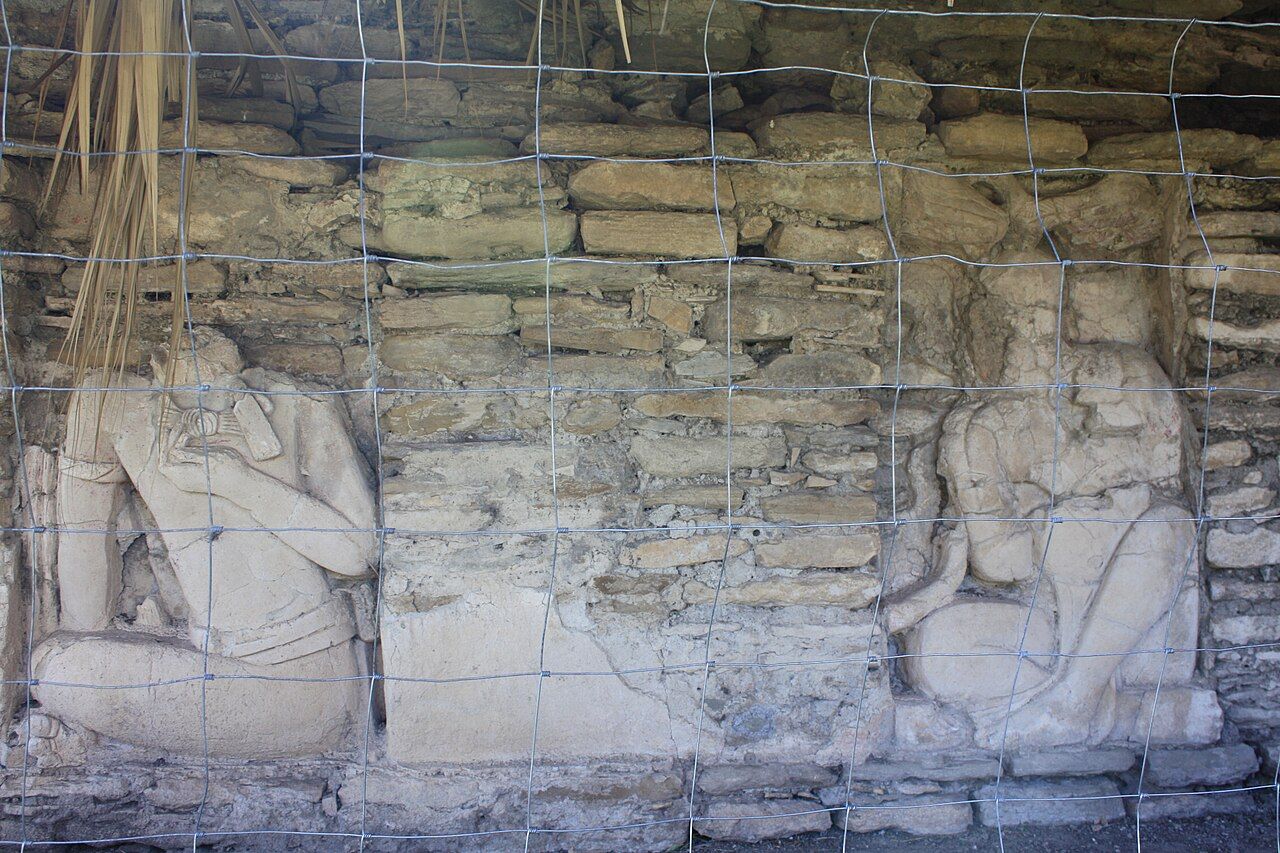
On the way up you pass the remains of palaces, small chambers, passageways and carved panels. One of the best known is a large stucco frieze on one of the middle terraces, often called the Frieze of the Four Eras, showing figures, feathered frames and a skeletal death figure in a scene about the cycles of time and the underworld. It is protected by a roof and wire screen, and the details reward a slow look. Elsewhere, fragments of stucco and carved stone appear in unexpected corners, and some areas may be roped off for conservation.
The top of the acropolis is a narrow summit of temples with a view over the whole valley: fields, rivers, hills and the town of Ocosingo in the distance. It is windy and exposed, and the steps on the way down feel steeper than on the way up. Take your time, use your hands where you need to, and skip the highest stairways if heights bother you; the middle terraces are rewarding on their own.
Also in the valley: Palenque, a Maya city worth the long road down
A short history
Toniná was an important Maya kingdom in the Classic period, especially in its later centuries. Its rulers were known for their wars with neighbouring cities, and carved monuments at the site record captives taken in battle, including a ruler of Palenque. It is also known for its many sculptures of captives, bound and kneeling, which speak of a culture where war and status were closely connected.
Toniná also holds one of the latest dated Maya monuments of the Classic period, carved in the early tenth century, when many great cities to the north and east were already in decline or abandoned. That gives the site a special place in discussions of the end of Classic Maya civilisation. The name Toniná is generally explained as coming from Tzeltal words meaning house of stone, and it is still used by the people of the area.
Much remains unexcavated, and work at the site continues. What you see is the most studied part of a larger city that once spread across the surrounding hills.
The site museum
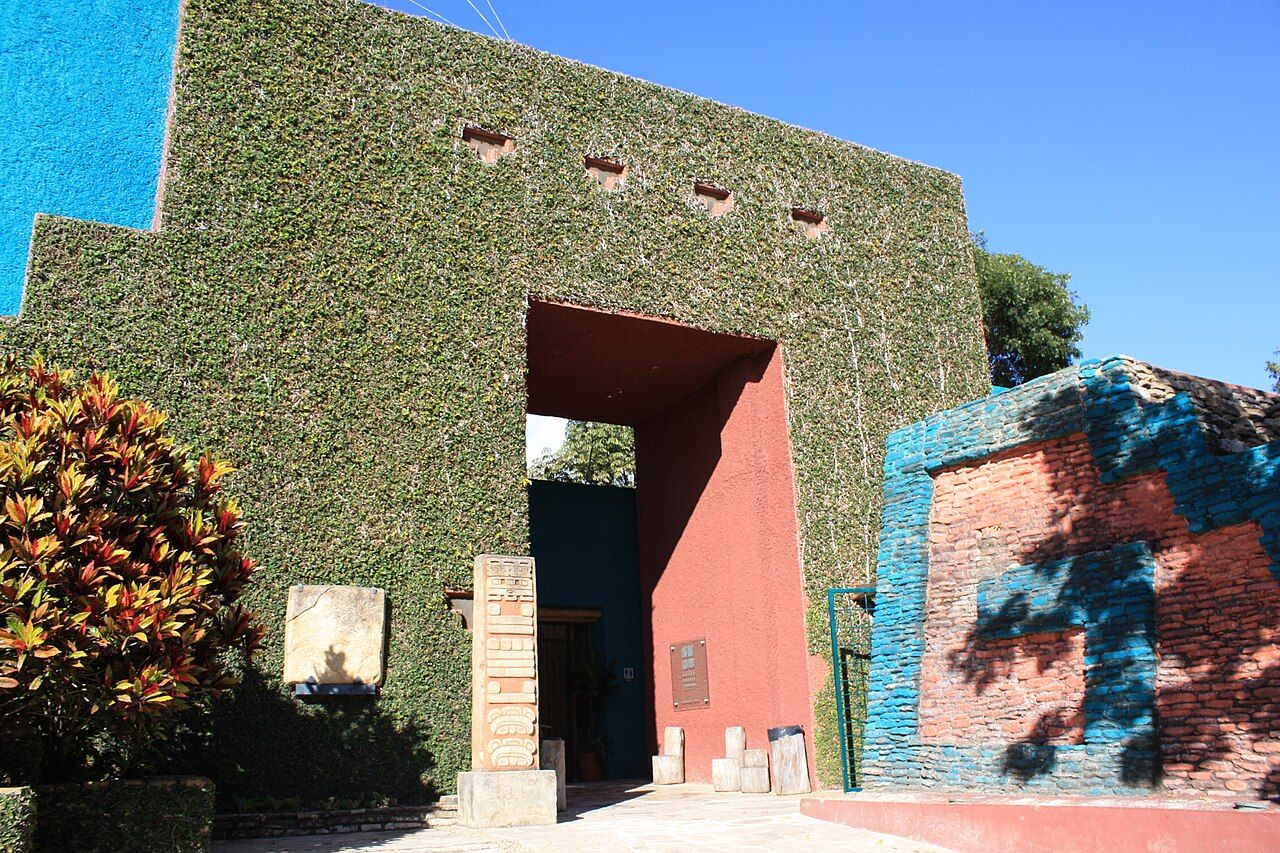
At the entrance stands a modern site museum with carved monuments, sculptures and objects found during excavation. It is worth visiting before or after the climb: the sculptures of captives and rulers are shown at eye level, with better light than you get on the acropolis, and the displays help explain the history and layout of the city.
 Shot by David Cabrera · licence CC BY-SA (source file)

Opening hours and fees for both the museum and the archaeological zone change from time to time, and the site may close on certain days or holidays.
Practical points for the climb
Ocosingo lies far lower than San Cristóbal, and the valley is warm and humid much of the year. Bring water, a hat and sunscreen, and wear shoes with good grip: the stone steps can be uneven and slippery after rain. In the rainy season, roughly from late spring to autumn, afternoon storms are common, so the morning is the best time to climb.
There is little shade on the upper terraces. Take breaks in the shaded rooms and passages along the way, and drink regularly. If you are travelling with children or anyone uneasy with heights, the plaza, the lower terraces and the museum make a satisfying visit on their own.
- Start early from San Cristóbal or stay overnight in Ocosingo.
- Carry cash for fees and local transport.
- Do not climb on roped-off areas or touch the stucco.
Quieter than Palenque
If Palenque is the famous jungle city, Toniná is its austere rival in the hills, and seeing both on the same trip gives you a fuller picture of the Classic Maya world. Toniná offers fewer crowds, a more physical visit and a strong sense of place, especially in the early morning when the mist lifts off the valley. For anyone curious about the Maya past behind the living Tzotzil and Tzeltal cultures of the highlands, it is one of the most rewarding stops in Chiapas.
Camera work: Christopher Javier Cuenca García · licence CC BY-SA (source file); panza-rayada · licence CC BY-SA (source file); Rod Waddington · licence CC BY-SA (source file)


