
Two hill churches and the stairways that reach them
At the east end of town, Guadalupe; to the west, San Cristóbal on its steep hill. Both are reached by long stairs, both repay the climb with views across the Jovel valley.
- From the zócalo
- Fifteen to twenty minutes on foot
- Altitude
- In town
- Getting there
- On foot from the zócalo
- Bring
- Water, a light jacket, comfortable shoes
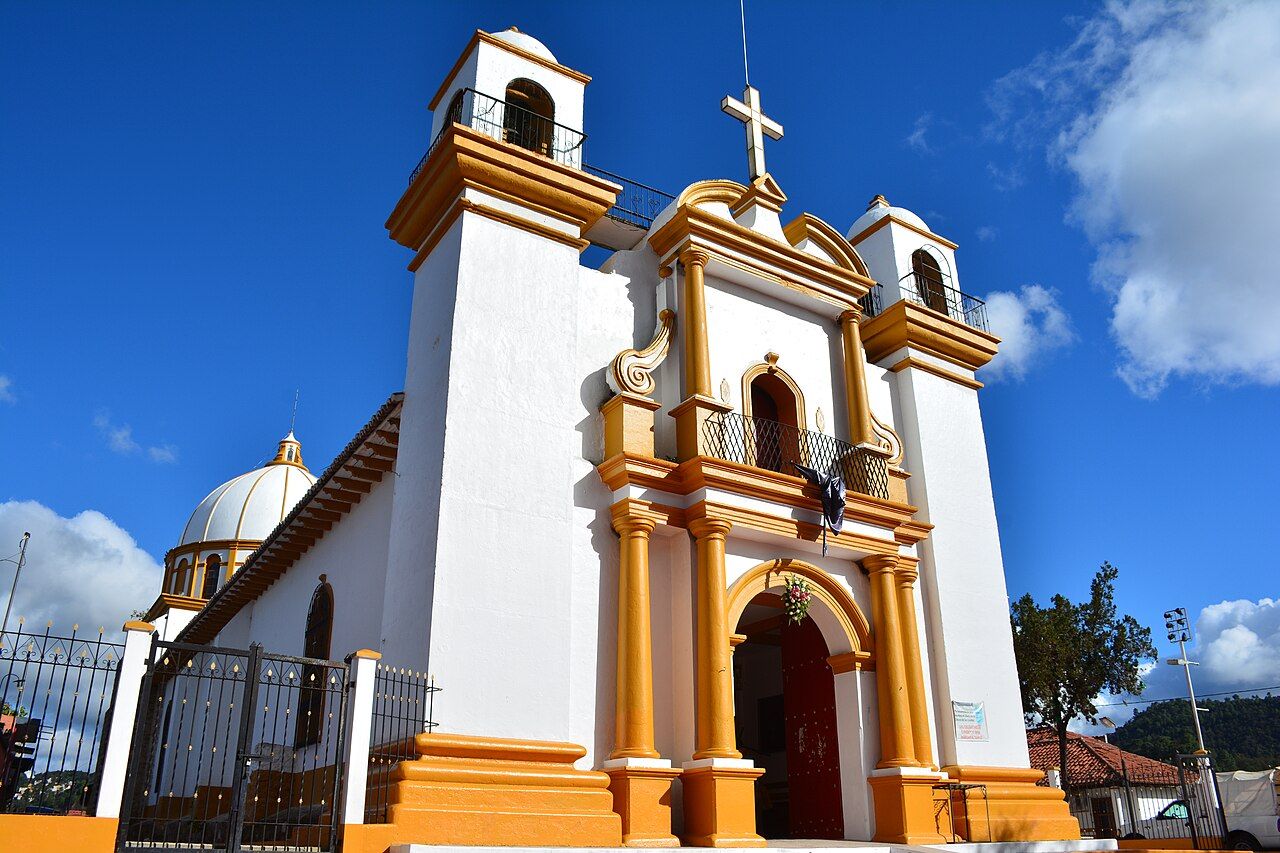 Shot by Anthony G. Reyes · licence CC BY-SA (source file)

San Cristóbal lies in a broad, flat-bottomed valley ringed by forested ridges, and here and there small hills rise from the valley floor inside the town itself. Two of them carry churches that can be seen from much of the centre: Guadalupe to the east and San Cristóbal to the west. Climbing to one or both is among the simplest pleasures the town offers. You get exercise, a sense of the town's layout and, on a clear day, a view over red-tiled roofs to the mountains beyond.
Neither climb is long in distance, but both involve many steps, and the altitude makes them harder than they look. Take them slowly, and pick a clear morning if you can.
Guadalupe at the end of the long street
The church of Our Lady of Guadalupe sits on a small hill at the eastern end of Real de Guadalupe, the long walking street that leaves the zócalo heading east. That alignment is no accident: the street points straight at the hill, and the church is visible for most of the walk. When you reach the foot of the hill, a wide stairway climbs to the atrium in front of the church.
The church itself is a white building trimmed in orange-gold, with twin bell towers, a balcony over the door and a dome behind. It is not among the oldest churches in town, but it is one of the most loved. From the atrium you look back down Real de Guadalupe towards the centre, with the cathedral and the other church towers rising above the roofs.
The walk from the zócalo to Guadalupe follows the route described in the guide to the walking streets of San Cristóbal, so it is easy to combine the two in a single outing.
December and the Virgin of Guadalupe
Guadalupe is at the centre of one of the biggest celebrations of the year. In the days leading up to the feast of the Virgin of Guadalupe on 12 December, pilgrims arrive from across the region, many of them groups of runners carrying lit torches, sometimes having travelled long distances. Real de Guadalupe fills with stalls, food, music and fireworks, and the stairs to the church are crowded day and night.
It is a joyful, noisy and devotional time, and visitors are welcome to watch. Keep in mind that it is first a religious occasion: give space to pilgrims climbing the steps, dress respectfully in and around the church, and ask before photographing anyone. Fireworks are launched close to crowds, so keep a sensible distance. The broader cycle of feasts is covered in the guide to candles and feast days.
San Cristóbal on its steep western hill
The second hill, the Cerro de San Cristóbal, rises on the western side of the old town. It is steeper and taller than Guadalupe, and a long stairway of a few hundred steps climbs from the street to the church at the top, dedicated to Saint Christopher, after whom the town is named in part. Saint Christopher is the patron of travellers, and the climb feels like a fitting small pilgrimage for anyone who has come a long way to get here.
The stairs are steep in places and have landings where you can stop for breath. At the top, the small church and its terrace look east over the whole town. On a clear day you can pick out the cathedral, the dome of Guadalupe on its own hill opposite and the ridges that enclose the valley. In the late afternoon the town below turns golden while the hill itself falls into shadow.
The church of San Cristóbal celebrates its own feast in July, when the hill draws pilgrims, music and, traditionally, drivers who come to have their vehicles blessed.
Also in the valley: Amber, Maya medicine and the house of the jaguar
Other hill churches around town
Guadalupe and San Cristóbal are the best known, but they are not the only churches raised on high ground. Several of the older barrios have their own small temples at the top of stairways, and you will come across steps climbing to whitewashed facades in more than one part of town. Many of them are open only for services, but the stairs and the views are there whenever you visit.
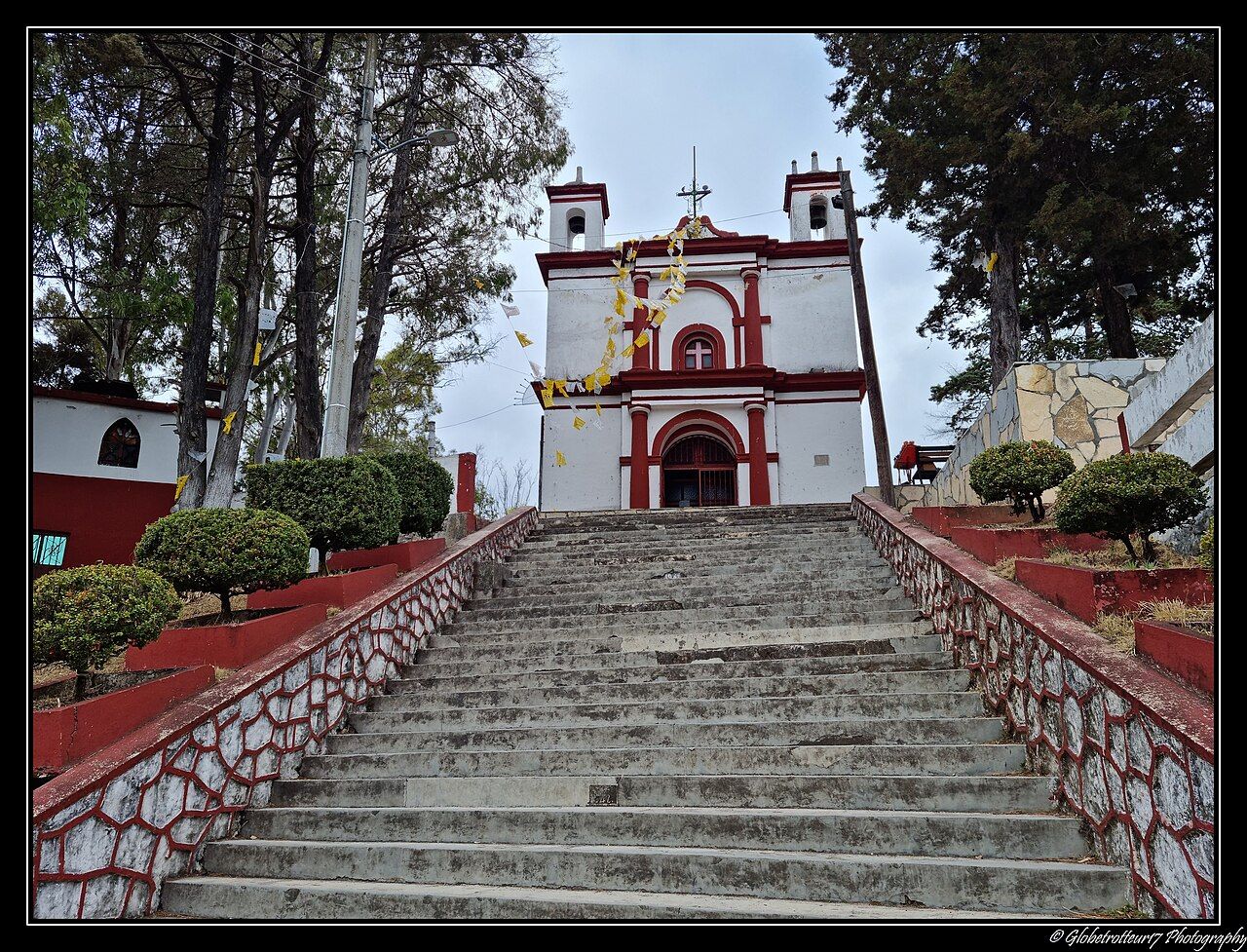 Shot by Globetrotteur17... Ici, là-bas ou ailleurs · licence CC BY-SA (source file)

Wandering out to one of these lesser-known churches is a good way to see neighbourhoods that most visitors never reach. The guide to El Cerrillo, Mexicanos and the other barrios has more on the districts around them.
Altitude, weather and the best time to climb
San Cristóbal sits at about 2,200 metres, and both hills add a little more. If you have just arrived from the coast or from a lowland city, give yourself a day before tackling the stairs to San Cristóbal. Climb at an easy pace, pause where the stairs level out, and carry water. The air is thin enough that even fit walkers notice their breathing.
The dry season, roughly November to April, offers the clearest views, with crisp mornings and blue skies. In the rainy months, clouds often gather over the mountains by early afternoon, and a heavy shower can make the stone steps slippery. Morning is usually the safest time for a clear view and dry stairs whatever the season.
Staying safe on the stairs
Both climbs are popular and normally busy during the day. As in many towns, though, the more isolated stairways and hilltops are best visited in daylight. Go up in the morning or afternoon, come down before dusk, and avoid lingering on the upper steps after dark, when the stairways empty out and the lighting can be poor. Walking with company is sensible, and keeping valuables out of sight is good practice anywhere.
Local conditions change, and so do access arrangements: churches close for repairs, stairways are sometimes fenced off, and feast days can bring temporary restrictions.
Putting the two climbs together
You can visit both hills in a single morning: start at San Cristóbal in the west while the light is behind you, walk back across the centre past the zócalo, and finish at Guadalupe at the end of Real de Guadalupe. The total walking is modest, but the stairs add up, so leave time for rest and a long look from each terrace. Seen from above, the grid of the old town and the green ring of mountains make clear why the Tzotzil name for the valley, Jovel, has stuck alongside the Spanish one.
Camera work: Rod Waddington · licence CC BY-SA (source file); BIOLOGO JORGE AYALA · licence CC BY-SA (source file); Linkogecko · licence CC BY-SA (source file)


