
Pox, candles and feast days in the highlands
In San Cristóbal and the villages around it, the year turns on feast days, marked by candles, rockets, music and the ceremonial spirit called pox.
- From the zócalo
- Across town on feast days
- Altitude
- In town
- Getting there
- On foot in town; short rides out
- Bring
- Ear plugs, warm layer, small cash, patience
 Shot by Semillo García · licence CC BY-SA (source file)

If you hear explosions in San Cristóbal, it is almost certainly a feast. Rockets go up from church courtyards before dawn, bands play in the streets, candles burn by the hundred, and paper banners flutter over the roads. The town and the villages around it follow a rich calendar of religious and community celebrations, and for visitors they are one of the best ways to see local life.
This guide covers the general shape of those celebrations, the candles and fireworks that mark them, and pox, the ceremonial spirit that plays a part in highland ritual.
A town of patron saints
Each barrio of San Cristóbal has its own church and patron saint, and each saint has a feast day. In the days around it, the barrio decorates its streets, holds Masses and processions, and fills its square with food stalls, games and music. With so many barrios, there is almost always a feast somewhere in town.
The feast of San Cristóbal, the town's patron, falls in late July, with celebrations at the hill church named after him. Other large celebrations include the feast of the Virgin of Guadalupe on 12 December, when pilgrims and runners carrying torches come to the hill church of Guadalupe, and the spring fair after Holy Week, with parades and a large fairground.
 Shot by Elgabilove · licence CC BY-SA (source file)

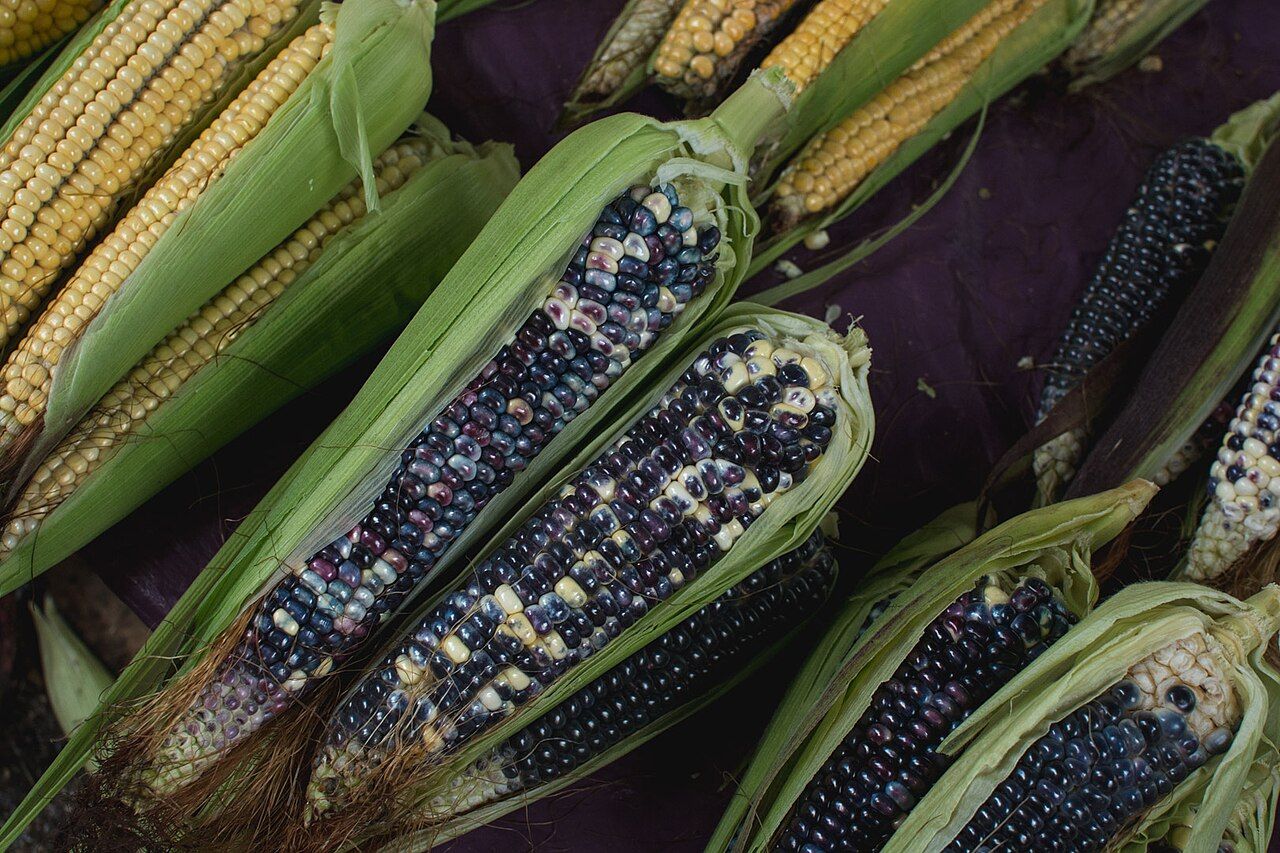
Feast days are also times for food: tamales, sweet breads, roasted maize and drinks sold from stalls around the churches. Maize, in many colours, is central to highland life and appears in both everyday meals and celebrations.
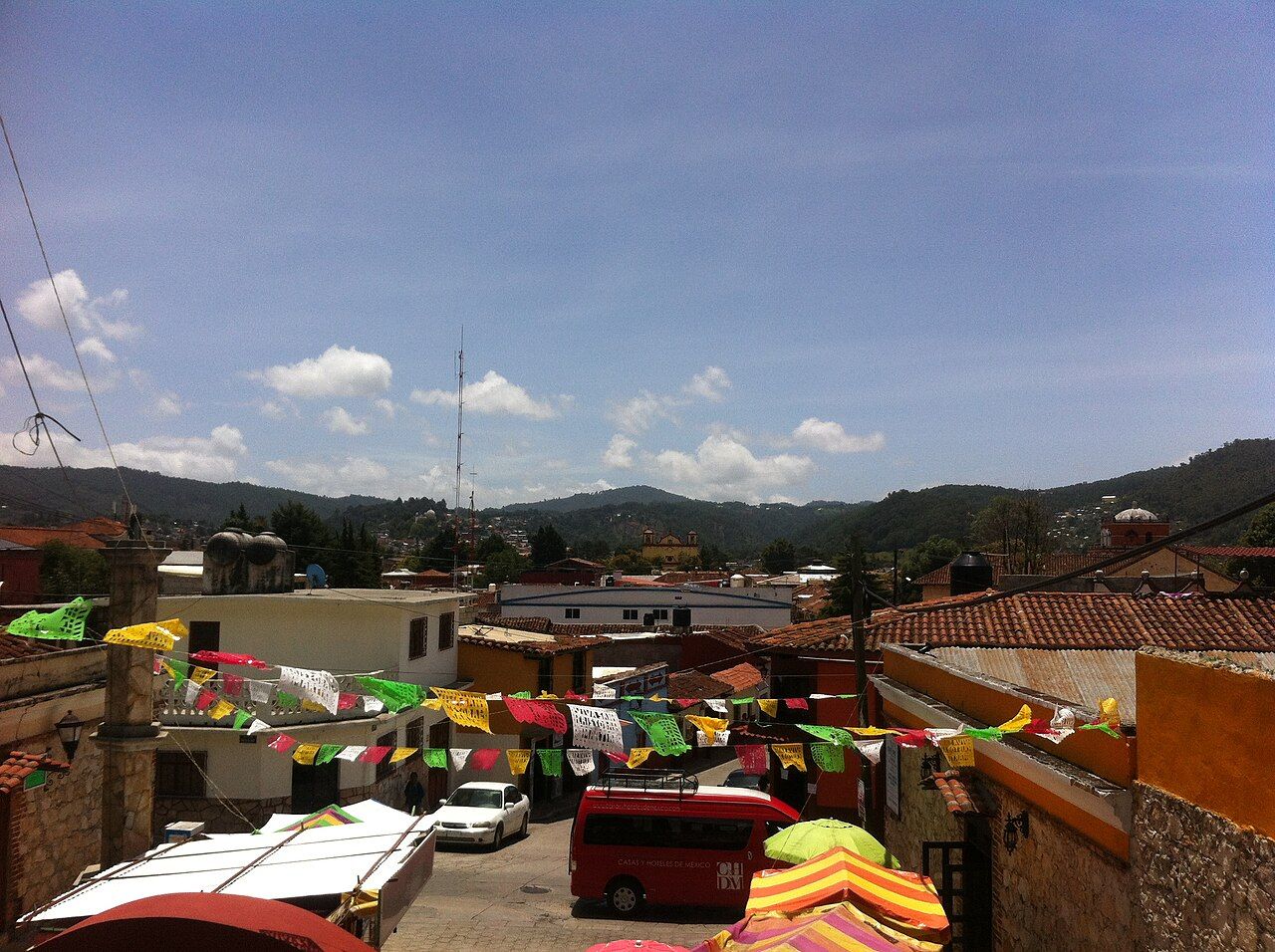
Before a feast, neighbours string papel picado across the streets: rows of thin tissue paper cut into lace-like patterns in bright pinks, greens, yellows and blues. The banners flutter over the roofs for days and often stay up, fading in the sun and rain, long after the celebration has ended. Arches of flowers and pine branches may frame church doors, and the courtyard fills with stalls well before the main day.
Candles and offerings
Candles are part of almost every celebration in the highlands. In churches, people light them as offerings and prayers, and in many communities they are arranged in specific patterns and colours with particular meanings. In the church of San Juan Chamula, the floor is covered with pine needles and rows of candles, and families pray in Tzotzil, sometimes with offerings of eggs, chickens or drinks. Photography inside that church is strictly forbidden.
In town, candle makers produce candles in many sizes and colours for churches and homes, and you will see people carrying bundles of them on feast days. The smell of wax and pine needles fills many churches during celebrations.
Also in the valley: San Juan Chamula, visited with respect
Rockets, bands and bells
Fireworks are inseparable from feast days. Rockets are fired into the air before dawn to wake the saint and the neighbourhood, and loud bangs continue at intervals through the day. In the evening, some feasts have elaborate wooden structures covered with fireworks, which spin and burst in sequence.
Brass bands and marimbas play in processions and squares, and church bells ring for Masses. The noise is part of the celebration, so if you need sleep, bring ear plugs. Stand well back from fireworks, which are set off close to crowds and do not always go where expected.
Pox, the ceremonial spirit
Pox, pronounced roughly like "posh", is a distilled spirit made from sugar cane and sometimes maize. In Tzotzil and Tzeltal communities, it has long had a ceremonial role: it is used in healing rituals and prayers, shared to seal agreements, and offered during feasts. In some rituals it is drunk in small amounts by participants, and in others it is poured as an offering.
Pox is also sold in town as a drink, sometimes flavoured with fruits or herbs. It is strong, and it is best treated with respect, both because of its alcohol content and because of its meaning for the communities that use it in ritual. If you are offered pox during a celebration, it is polite to accept a small amount or to decline gently.
Drinking in the streets during public celebrations is generally not allowed, and heavy drinking is frowned upon in many communities. Alcohol is banned or restricted in some villages, so follow local rules.
Carnival and the village calendar
The villages around San Cristóbal have their own feast calendars. Carnival, in the days before Lent, is especially important in Chamula and other highland communities, with costumes, music, processions and rituals that combine Catholic and Maya traditions. Other villages celebrate their patron saints with similar mixtures of ritual and festivity.
These celebrations are community events, not shows for tourists. Visitors are generally welcome to watch, but rules about photography and behaviour are strict in many places. Ask before taking photos, follow the instructions of local authorities, and accept that some ceremonies are private.
- Ask first before you photograph anyone, and take a shake of the head as final.
- Stay back from fireworks and processions.
- Dress warmly for early morning and evening events.
- Follow local rules on alcohol and photography.
Joining in
The best way to experience a feast is to wander, watch and eat. Follow the sound of a band, buy something from a food stall, and stand at the edge of a procession. You will see families in their best clothes, children playing, older people praying, and a town celebrating its saints and itself. Feasts are also a good time to see highland textiles worn with pride, as many people dress in their finest clothing for the occasion.
Camera work: Adam Jones · licence CC BY (source file)
