
San Juan Chamula, visited with respect
A short ride from San Cristóbal, the Tzotzil town of San Juan Chamula runs its own affairs and keeps its own faith. Visitors are tolerated on clear terms: learn them before you go.
- From the zócalo
- About twenty minutes by road
- Altitude
- Highlands
- Getting there
- Colectivo or taxi from San Cristóbal
- Bring
- Cash, modest clothes, a camera kept away
 Shot by b.jars · licence CC BY-SA (source file)

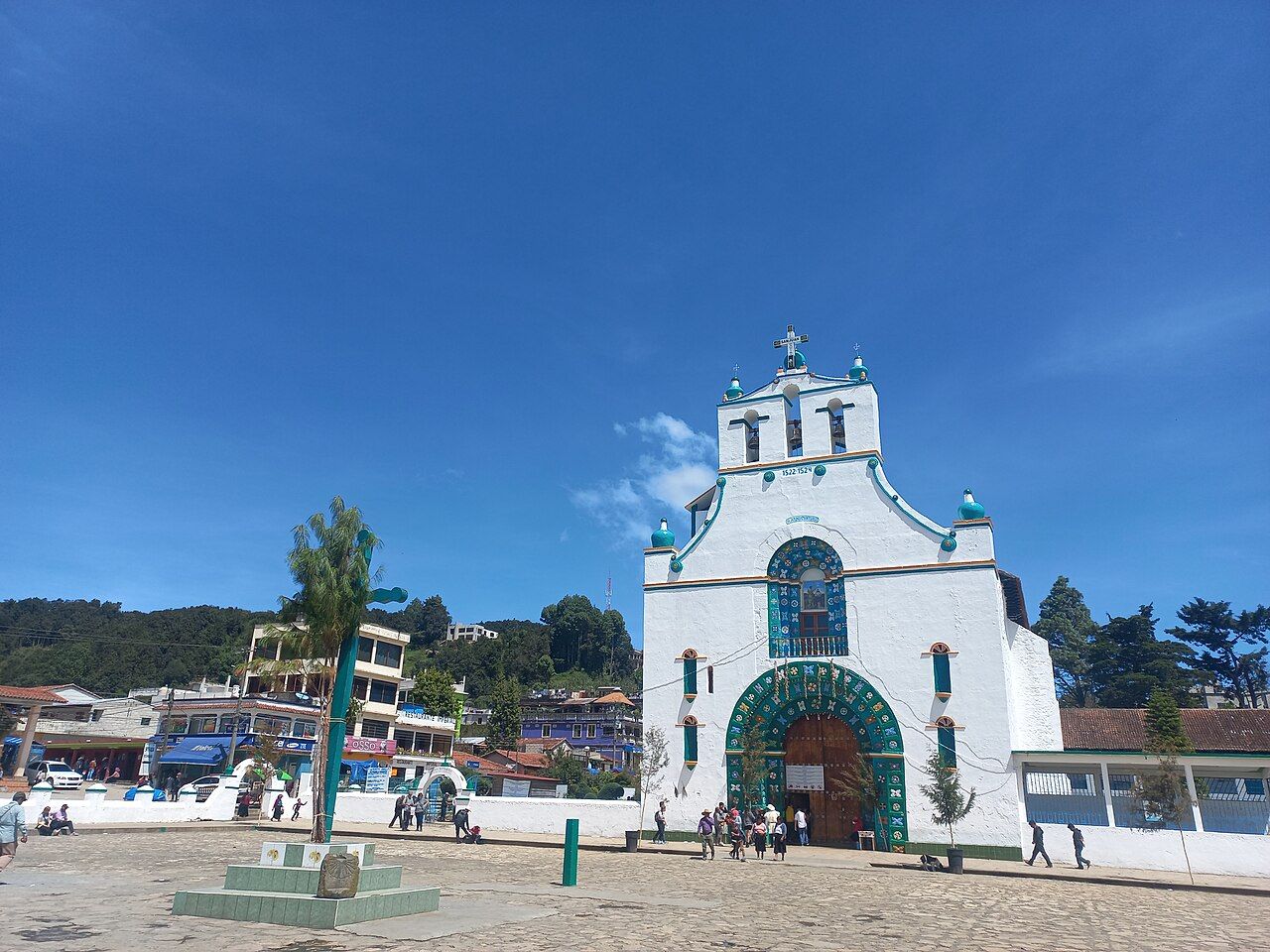
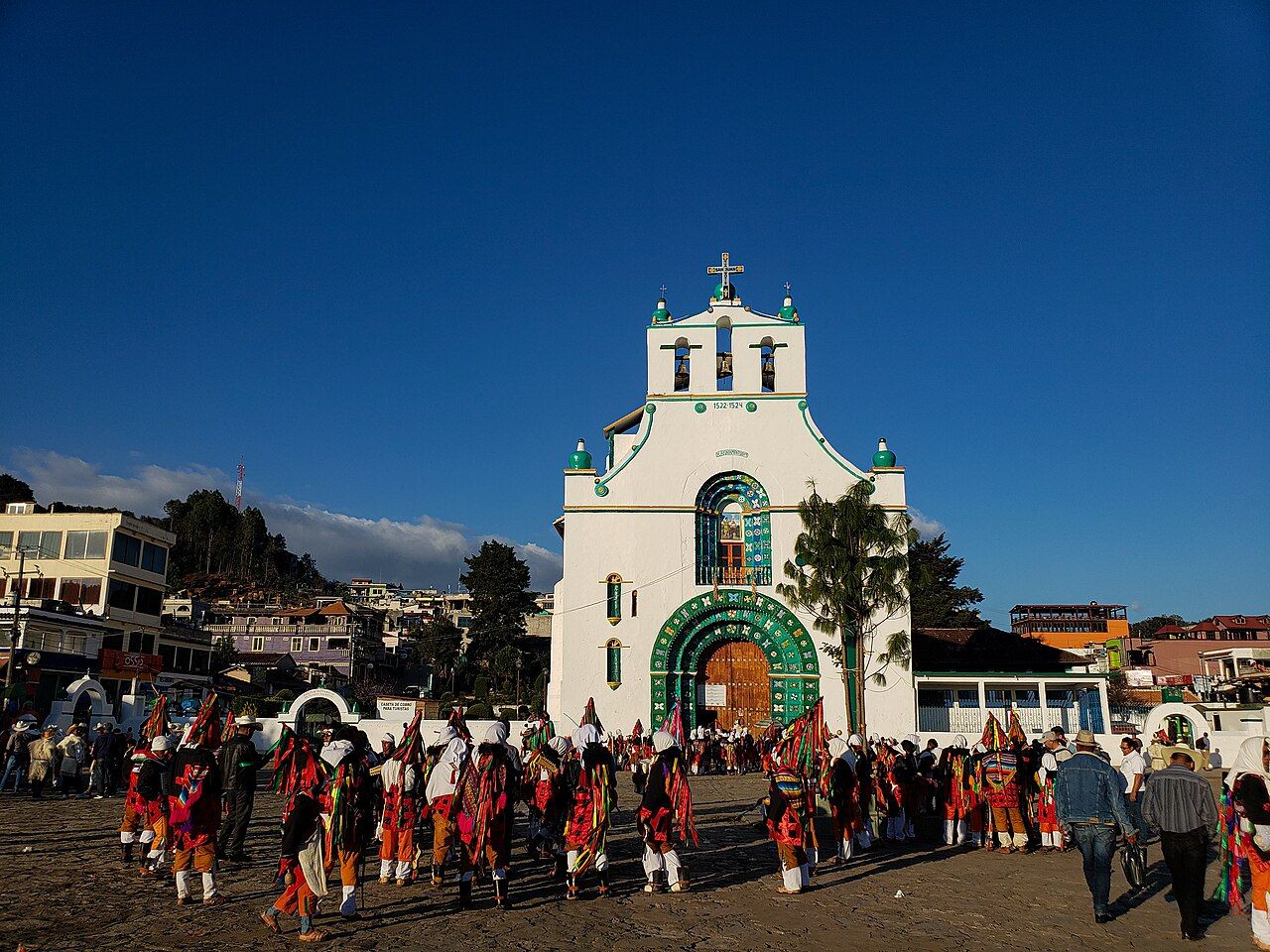
San Juan Chamula lies in the hills a short drive northwest of San Cristóbal, the head town of a large Tzotzil Maya municipality spread across the surrounding valleys and ridges. Its whitewashed church, with a doorway framed in a band of green and blue painted flowers, is one of the best-known images of Chiapas, and the town receives a steady flow of visitors.
That attention is not always comfortable for the people who live here. Chamula is a community with its own authorities, its own customs and its own faith, and it sets the terms on which outsiders may visit. If you go, go as a guest: quietly, modestly dressed, with your camera put away more often than not.
A town that governs itself
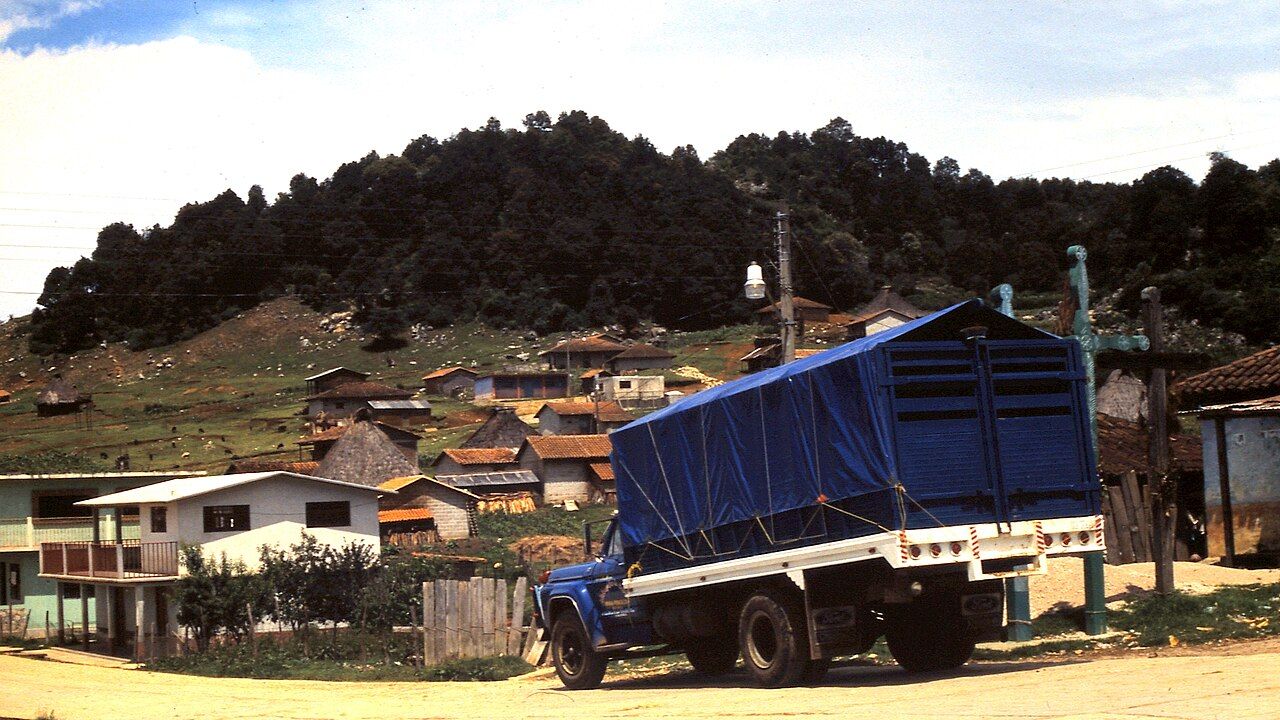
Chamula has a long history of resisting outside control, from the colonial period onwards. Today it combines the formal structures of a Mexican municipality with a system of traditional authority, in which men from the community serve in religious and civic posts, known in Spanish as cargos, for set periods. Officials carrying staffs of office and dressed in their distinctive clothing can often be seen around the plaza and the municipal building.
In practice this means that local rules matter more than anything you read elsewhere. The community decides who may enter the church, under what conditions, and what visitors may and may not do. Rules can change, and they are enforced. When an official, or a sign, tells you something, follow it without argument.
 Shot by OliBac · licence CC BY (source file)

The church of San Juan Bautista
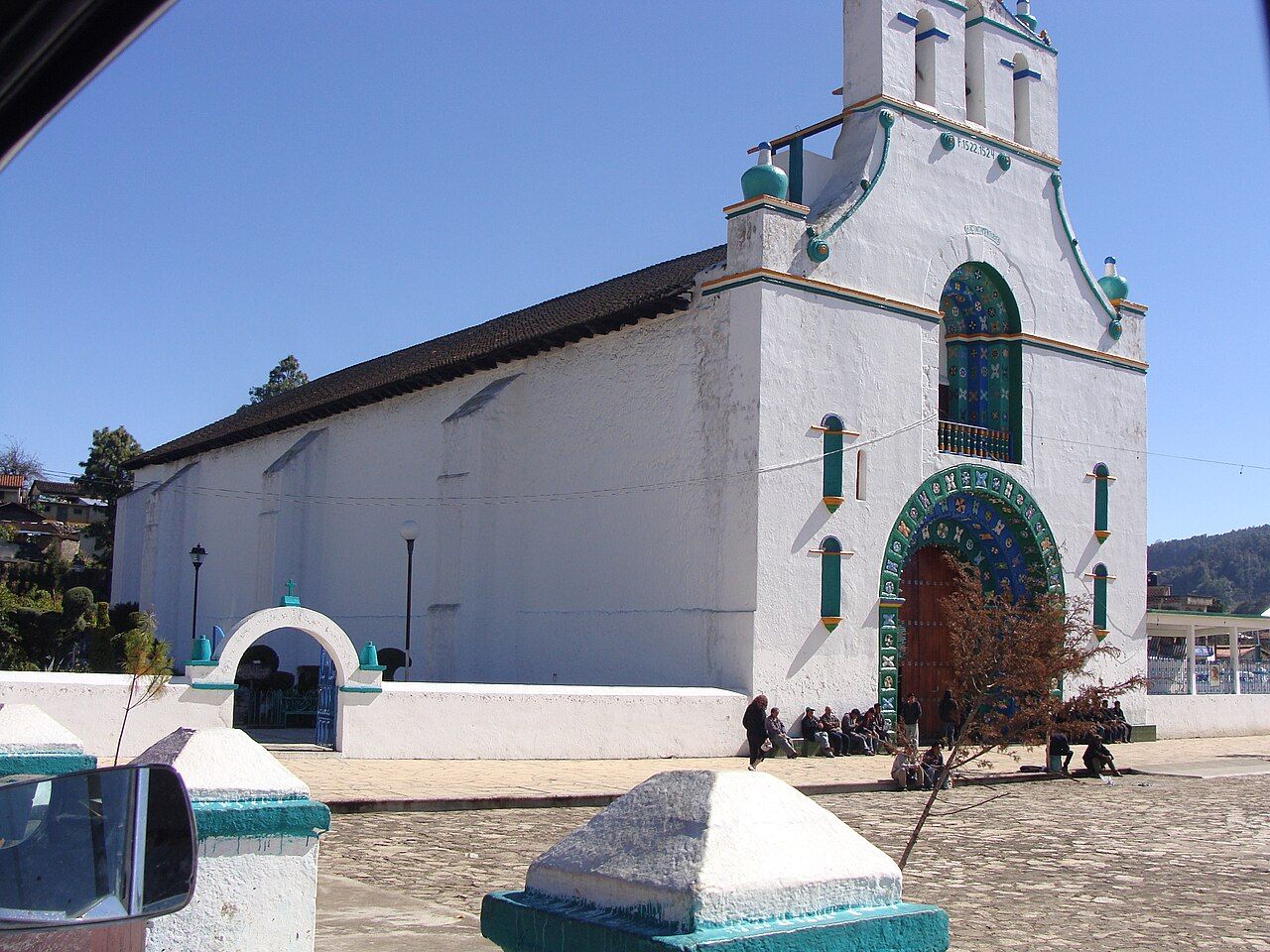
The church stands on one side of the large open plaza and is dedicated to Saint John the Baptist, the town's patron. From outside it looks like many colonial churches in the region: a white facade, a bell gable with green-trimmed openings and a broad arch around the door decorated with painted flowers in vivid colours.
Inside, it is unlike most churches visitors know. There are usually no pews. The floor is strewn with fresh pine needles, and people kneel or sit on it in family groups, setting out rows of candles and praying aloud in Tzotzil. Images of saints line the walls, many of them in glass cases and dressed in layers of clothing. The air is thick with candle smoke and the scent of pine and copal incense, and the light is low.
What happens in the church is a living form of worship that blends Catholic elements with older Maya beliefs, and it includes prayers for health, healing ceremonies and offerings. For the people taking part it is serious and often private: a family may be there to pray for a sick relative or to ask for help in hard times. It is not a performance, and visitors should not treat it as one.
 Shot by Leogeograph · licence CC BY-SA (source file)

No photography inside, ever
Photography of any kind inside the church is strictly forbidden. This includes phones, hidden cameras and video, and it applies whether or not a ceremony is taking place. The rule is taken very seriously by the community, and visitors who have broken it have faced serious consequences. Do not take your camera out inside, do not try to take a picture through the doorway, and do not ask for an exception.
To enter the church, visitors are generally required to buy a ticket from a municipal office in the town, and the arrangements and fees change from time to time. Ask in the plaza where to go. Inside, walk slowly along the edges, keep your voice low, never step over candles or between people and their offerings, and leave if you feel you are intruding. Some visitors choose not to enter at all, which is also a respectful choice.
It is not a performance, and visitors should not treat it as one.
Also in the valley: Amber, Maya medicine and the house of the jaguar
The plaza, the market and carnival
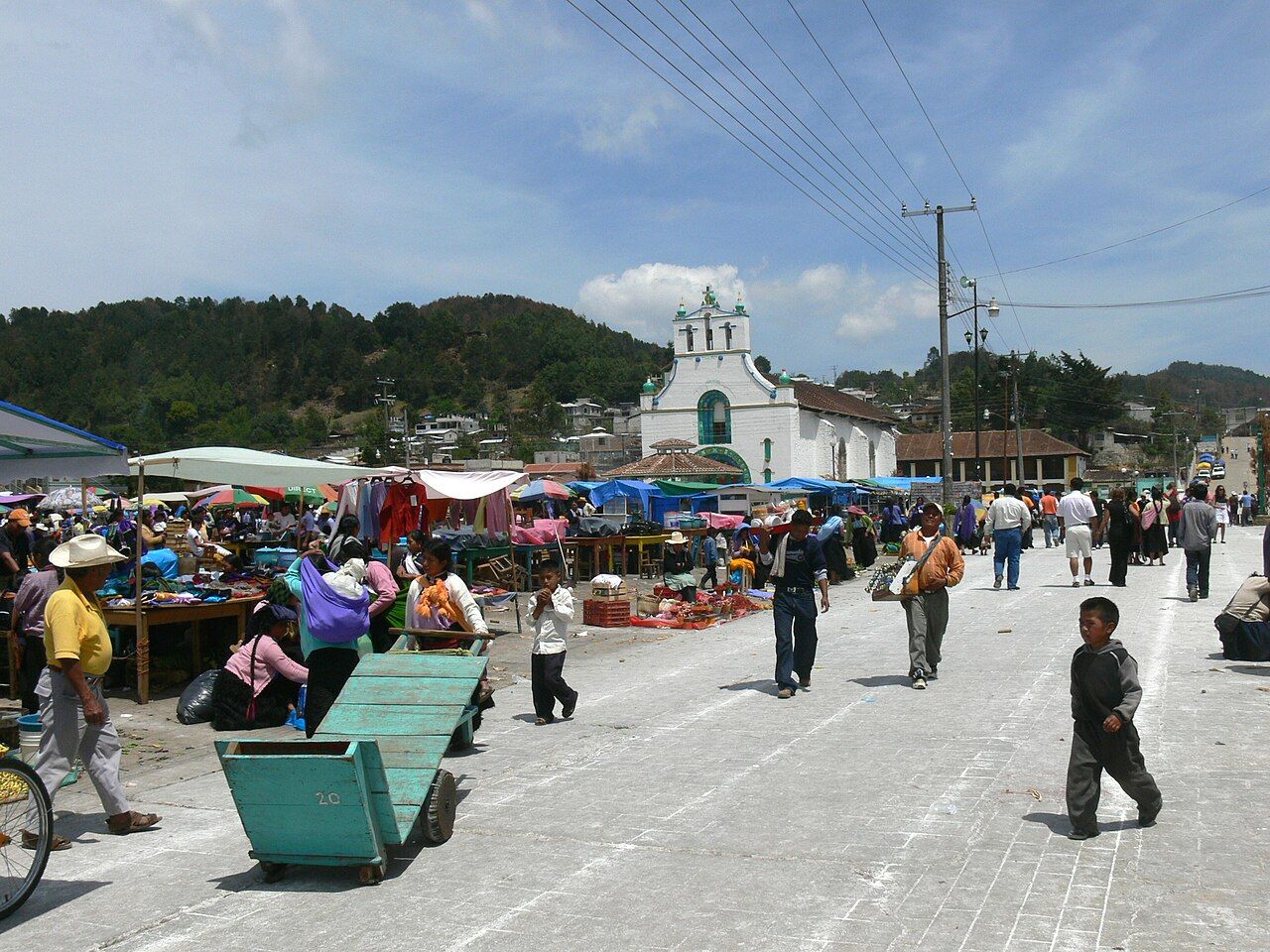
Outside the church, the plaza is the centre of town life. On ordinary days it is broad and fairly quiet, with officials, vendors and families crossing it on their business. On Sundays a large market fills the plaza and surrounding streets, with fruit, vegetables, meat, household goods, clothing and wool, and the town becomes far busier. People come in from hamlets across the municipality to buy, sell and meet, and Sunday is also an important day for civic and religious activity.
 Shot by Wolfgang Sauber · licence CC BY-SA (source file)

The town's most important celebrations draw huge crowds. The carnival before Lent is the largest, with processions of flag-bearers, music, costumed participants and rituals that run over several days. Other feasts, including that of Saint John the Baptist in June, are also major occasions. These are community and religious events first. Watch from the edges, never photograph people without permission, and follow any instructions given.
 Shot by Jonathan Alexis G · licence CC BY-SA (source file)

Taking photographs outside, and other manners
Outside the church, photography is not banned outright, but it is often unwelcome. Many people in Chamula do not want to be photographed, and some will react angrily if you try. Always ask before photographing anyone, including children and vendors, and accept a no gracefully. Photographs of the church exterior and the plaza in general are usually tolerated, but be discreet, and if anyone signals that you should stop, stop at once.
- Dress modestly: covered shoulders and legs below the knee are a good guide.
- Carry cash in small notes for tickets, purchases and any fees.
- Children may approach to sell bracelets or small items; a polite refusal is fine.
- Drink only what you choose to; you may see the cane spirit called pox used in ritual, and it is not for casual tasting.
- Do not wander uninvited into homes, courtyards or the cemetery during private ceremonies.
The guide to Tzotzil, Tzeltal and how to be a guest explains more about greetings, language and etiquette in the highland communities, and the story on pox, candles and feast days covers the drink and the festival calendar in more general terms.
Getting there and getting back
Chamula is close to San Cristóbal, and the road climbs through pine forest and farmland. Shared minibuses and vans known as colectivos run from the area around the municipal market in San Cristóbal, and taxis can be hired for the trip. Some visitors walk or cycle the route, but traffic, narrow verges and changing local conditions make it advisable to ask for current advice before setting out on foot.
A visit to Chamula combines naturally with one to Zinacantán, the neighbouring Tzotzil town, which has its own church, greenhouses and weaving. Both are rewarding, but they are different places with different customs, so do not assume that what is acceptable in one is acceptable in the other.
Local politics in the highlands can be tense at times, and conditions on the roads change. Respecting that decision is part of visiting with respect.
Camera work: Adam Jones · licence CC BY (source file)
