
Zinacantán, valley of flowers
Greenhouses spread across the valley floor, shawls embroidered with flowers in purple and blue, a church at the centre of town: Zinacantán is a working Tzotzil community, and visitors come on its terms.
- From the zócalo
- About twenty minutes by road
- Altitude
- Highlands
- Getting there
- Colectivo or taxi from San Cristóbal
- Bring
- Cash in small notes and good manners
 Shot by Adam Jones · licence CC BY (source file)

West of San Cristóbal, a road climbs over a ridge and drops into a green valley lined with plastic greenhouses. This is Zinacantán, the head town of a Tzotzil Maya municipality, and those greenhouses are its business: carnations, chrysanthemums, roses and many other flowers grown for markets across Chiapas and beyond. The name Zinacantán comes from the Nahuatl for place of bats, and the community's Tzotzil name carries a similar meaning.
Zinacantán is smaller and quieter than its neighbour San Juan Chamula, and for many visitors it is a gentler introduction to the highland villages. It is still a community with its own authorities, customs and rules, and the courtesy you bring matters as much here as anywhere.
A valley of greenhouses
Flower growing transformed Zinacantán over the last decades of the twentieth century. Families moved from growing maize and beans on the slopes to cultivating flowers under plastic, and the valley floor and lower hillsides are now dotted with greenhouses. Much of the produce goes to the markets of San Cristóbal and Tuxtla Gutiérrez; some travels further.
The influence of flowers goes beyond farming. They appear on church altars, at feasts and in homes, and they are the main motif on the town's clothing. If you visit the municipal market in San Cristóbal early in the morning, as described in the guide to the municipal market at dawn, many of the bundles of flowers on sale will have come from here.
Purple and blue embroidery
Zinacantán's clothing is among the most recognisable in the highlands. Men and women wear shawls and tunics woven in deep blues, purples and violets, then richly embroidered with flowers. The colours and designs have changed considerably over the years, shifting from the reds and pinks of earlier generations to the floral styles of today, and new patterns and colour trends appear from year to year. It is a living tradition that moves with fashion rather than a fixed costume.
Much of the weaving is still done at home on the backstrap loom, with embroidery added afterwards, often by hand and sometimes by machine. The technique, and how designs signal a person's community, are explained in the guide to backstrap looms and highland textiles.
Weaving and cooking at home
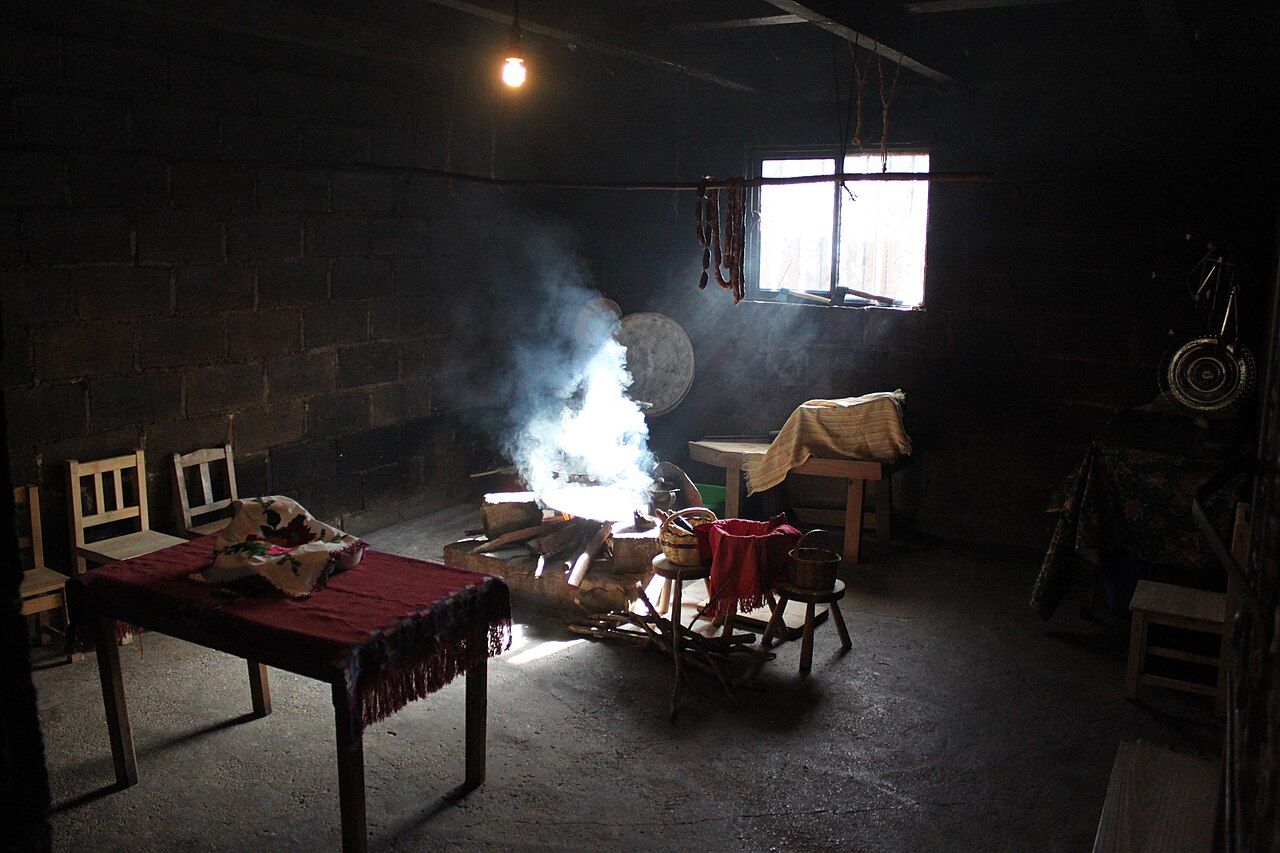
Some families in Zinacantán welcome visitors into their homes to see weaving in progress, to taste tortillas made on the comal over an open fire, and to buy textiles directly from the people who made them. These visits are a source of income for the families involved, and they can be one of the more personal experiences available in the highlands.
 Shot by Anagoria · licence CC BY (source file)

If you are invited in, treat it as you would a visit to anyone's house. Ask before taking photographs of people or of the home's interior, buy something if you can, and pay fairly without hard bargaining. A highland kitchen is usually built around an open hearth, so expect it to be smoky. Many households will expect some contribution even if you do not buy, so carry small notes.
Also in the valley: Santo Domingo and the textile stalls around it
The church of San Lorenzo
At the centre of the town stands the church dedicated to Saint Lawrence, San Lorenzo, the town's patron, with a smaller church nearby. The church is a place of active worship, often decorated with fresh flowers and pine boughs. Visitors may be asked to pay a fee to enter the church area or the town centre, and the arrangements change, so ask when you arrive.
Photography inside the church is not allowed, and the rule is enforced. In the churchyard and around the plaza, keep your camera discreet and ask before photographing anyone. The feast of San Lorenzo in August is the town's biggest celebration, with processions, music, fireworks and visitors from the surrounding communities.
Visiting with good manners
The same principles apply here as in other highland communities. Many people do not want to be photographed, and the request to ask first is not a formality. Dress modestly, keep your voice down around the church, and do not walk into houses, courtyards or greenhouses without an invitation. Children may ask you to buy small items; a friendly refusal is fine.
- Ask before any photograph of a person, and accept a refusal.
- Pay entrance fees where they are requested; the community sets them.
- Bring cash in small notes; there may be nowhere to change larger ones.
- Follow instructions from local authorities without argument.
Learning a word or two of greeting goes a long way, as the guide to Tzotzil, Tzeltal and how to be a guest explains. Even a simple attempt is usually appreciated.
Getting there and combining visits
Zinacantán is a short ride from San Cristóbal, and shared vans known as colectivos run there from the area around the municipal market. Taxis are also an option. Many visitors combine Zinacantán with San Juan Chamula in a single morning or afternoon, which is easy given the short distances, though each town deserves time of its own.
The highlands are high, and the weather can turn quickly: mornings are cold, afternoons in the rainy season often bring heavy showers. Carry a warm layer and a rain jacket.
Camera work: b.jars · licence CC BY-SA (source file)
