
Backstrap looms and the textiles of the highlands
In the villages around San Cristóbal, women weave on looms tied between a post and their own bodies, and the patterns they make still say a great deal about where they come from.
- From the zócalo
- All around the centre
- Altitude
- Highlands
- Getting there
- Markets in town and nearby villages
- Bring
- Cash in small notes, time, patience, a bag
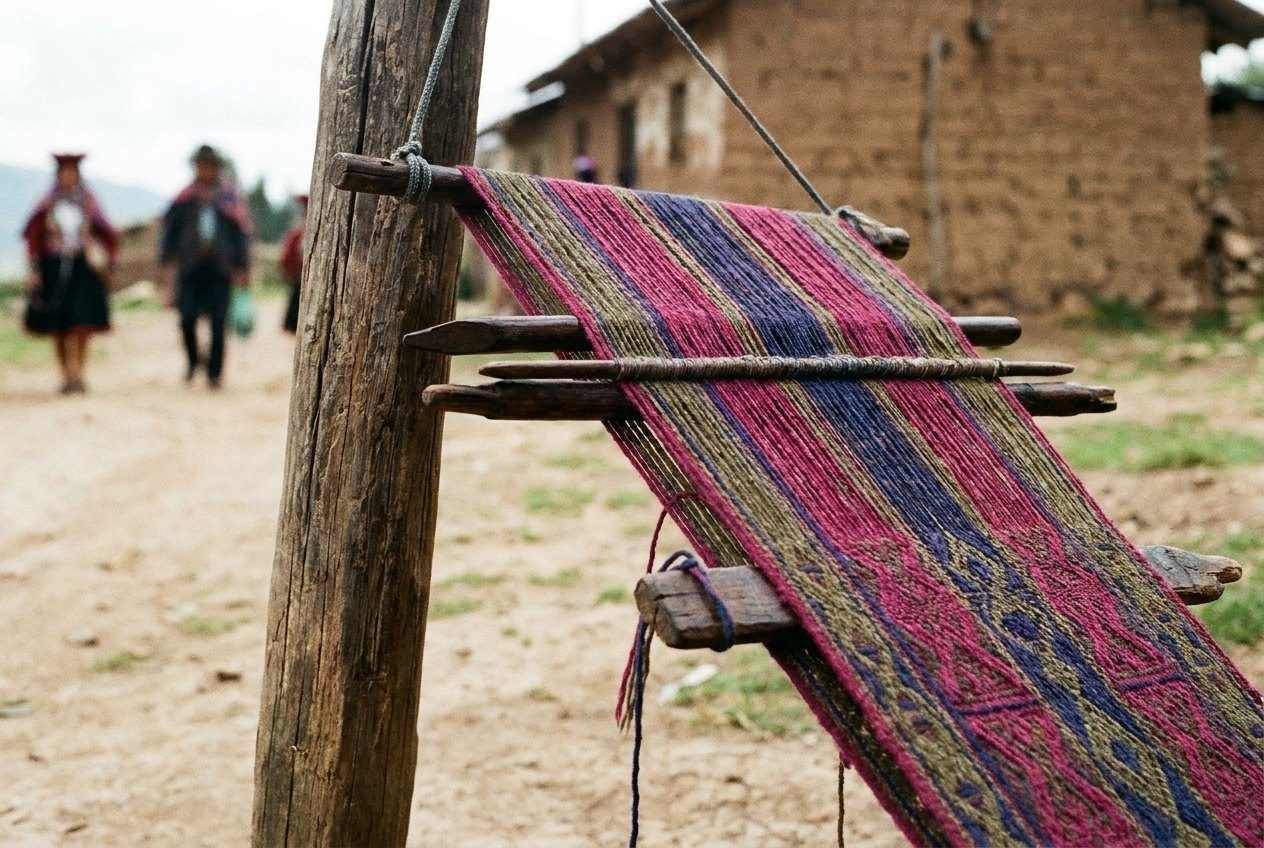
Walk through San Cristóbal for an hour and you will see more handwoven cloth than in most cities in a lifetime. Women from the surrounding villages wear their own blouses, skirts and shawls; stalls around the churches overflow with textiles; and in many homes in the highlands, weaving remains part of daily life. Much of that cloth comes from one of the oldest tools in the Americas: the backstrap loom.
This guide explains how the loom works, what the patterns can tell you, and how to buy in a way that is fair to the people who make the cloth.
How a backstrap loom works
A backstrap loom is simple in its parts and complex in its use. The warp threads, which run lengthwise, are stretched between two wooden bars. One bar is tied to a post, a tree or a hook on a wall. The other is attached to a strap that goes around the weaver's lower back. By leaning back or forward, the weaver controls the tension of the threads with her own body.
Between the bars, a set of sticks and rods lifts different groups of warp threads so the weaver can pass the weft, the crosswise thread, through them. A flat wooden sword beats each new row tight. Because the width is limited by the reach of the weaver's arms, many garments are made of two or three panels sewn together.
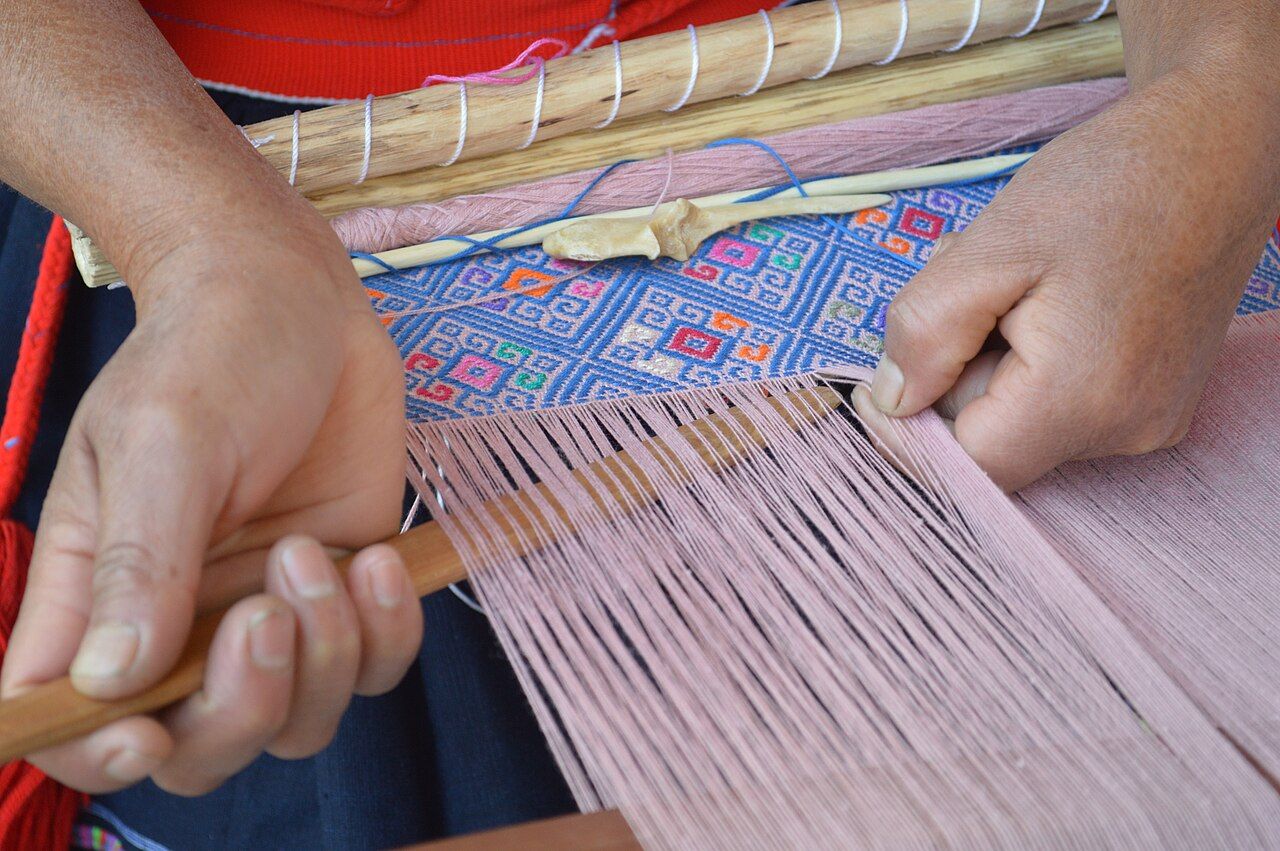 Shot by AlejandroLinaresGarcia · licence CC BY-SA (source file)

The loom can be rolled up and carried, and work can stop and start around other tasks. A single complex piece can take weeks or months to finish, depending on its size and the density of the pattern.
Designs that tell a village
In the Chiapas highlands, clothing has long marked the community a person belongs to. Colours, patterns and cuts vary from village to village, so people familiar with them can often tell where someone is from at a glance. In Zinacantán, for example, clothing is dense with flowers in purples, blues and pinks, while in San Juan Chamula women often wear heavy skirts of black wool and men wear white or black wool tunics.
Many patterns carry older meanings. Diamond shapes are often explained as representing the world or the path of the sun, and other motifs refer to plants, animals, saints or ancestors. Interpretations vary between communities and weavers, and they continue to change: new colours, threads and designs appear every year, and fashion matters as much in the villages as anywhere else.
Also in the valley: Santo Domingo and the textile stalls around it
Brocade and embroidery
Much of the decoration on highland textiles is woven into the cloth on the loom using brocade, a technique where extra threads are added to the weft to create raised patterns. It is slow work, done row by row, and the best pieces show patterns of remarkable fineness and symmetry.
Embroidery is added afterwards with a needle, and in some communities it has become the main form of decoration. Machine embroidery is also widely used today, especially for clothing worn every day, and it is not something to look down on: it is part of how weaving traditions adapt. Most stalls sell a mix of handwoven, hand-embroidered and machine-made pieces, and knowing the difference helps you understand what you are paying for.
Signs of handwork include slight irregularities in the pattern, threads that pass fully through the cloth when you look at the back, and a density that machines rarely match. Ask the seller how a piece was made; most will answer honestly.
Wool, cotton and dyes
Highland weavers use cotton, wool and synthetic threads. In the colder villages, wool from local sheep is spun, woven and felted into heavy skirts and tunics. Cotton is used for lighter garments. Natural dyes from plants, insects and minerals are still used by some weavers, though bright synthetic colours are now common and have their own history in the region's fashion.
Sheep are treated with special respect in some communities, and in Chamula they are often kept by women and not eaten. Spinning, dyeing and weaving are part of a chain of work that starts long before the loom.
Cooperatives and buying fairly
Since the second half of the twentieth century, many weavers in the highlands have organised into cooperatives, which sell work directly and help weavers keep a larger share of the price. Some also document and revive older designs. When you buy from a cooperative, a market stall or directly from a weaver, you are supporting work that often provides an important part of household income.
Bargaining is common in markets, but keep it gentle. A large textile can represent weeks of work, and haggling a few pesos off a woven piece makes little difference to you and a real difference to the maker. Prices in town vary widely, so look around before buying, and ask about how and where the piece was made.
- Ask before photographing weavers or their work.
- Carry cash in small notes; change is not always available.
- Check the back of a piece to see how it was made.
- Do not bargain hard on handwoven cloth.
Seeing textiles in town
In San Cristóbal, the craft market around the Santo Domingo church is the busiest place to see textiles from many communities in one place, and the textile museum in the former convent next door shows older and finer pieces with explanations of their origins. Market days in the villages are another chance to see clothing worn and traded rather than only sold to visitors.
Wherever you go, treat textiles as part of living cultures rather than souvenirs alone. The women who make them are artists, and many of the patterns they weave have been passed down within families for generations. Taking the time to understand a little of that makes the cloth you take home much more meaningful.
Camera work: Semillo García · licence CC BY-SA (source file); Adam Jones · licence CC BY (source file)

