
The municipal market at dawn
Before the walking streets wake up, the municipal market is already in full swing: highland vegetables, dried chillies, flowers, herbs and live poultry, sold by families who arrive from the villages in the dark.
- From the zócalo
- About fifteen minutes on foot
- Altitude
- In town
- Getting there
- Walk north past Santo Domingo
- Bring
- Small change, a shopping bag, discretion
 Shot by darij · licence CC BY (source file)

The craft stalls around Santo Domingo cater largely to visitors. A few blocks further north, the municipal market serves everyone else. Officially named the Mercado José Castillo Tielemans, it is a sprawling complex of covered halls, open stalls and crowded aisles where the town and the surrounding highland communities buy and sell their food. It is noisy, busy, sometimes muddy, and one of the most vivid places in San Cristóbal.
Going at dawn, or as soon after as you can manage, shows the market at its most authentic. Trucks and colectivos arrive from the villages, sellers set out their goods, and residents come to shop before work. By mid-morning the aisles are packed.
Finding the market
The market lies north of the centre, beyond Santo Domingo. The simplest route is to walk north from the zócalo along the andador past the cathedral, continue to the textile stalls described in the guide to Santo Domingo and the textile market, and keep going a few more blocks. You will know you are close when the pavements fill with stalls, sacks and handcarts, and the streets clog with minibuses and taxis.
The market spreads out well beyond its main building, with sellers lining surrounding streets, so its edges are not always easy to define. Do not worry about getting lost; wander, and when you have had enough, head south and you will soon be back in the old centre.
What you will find
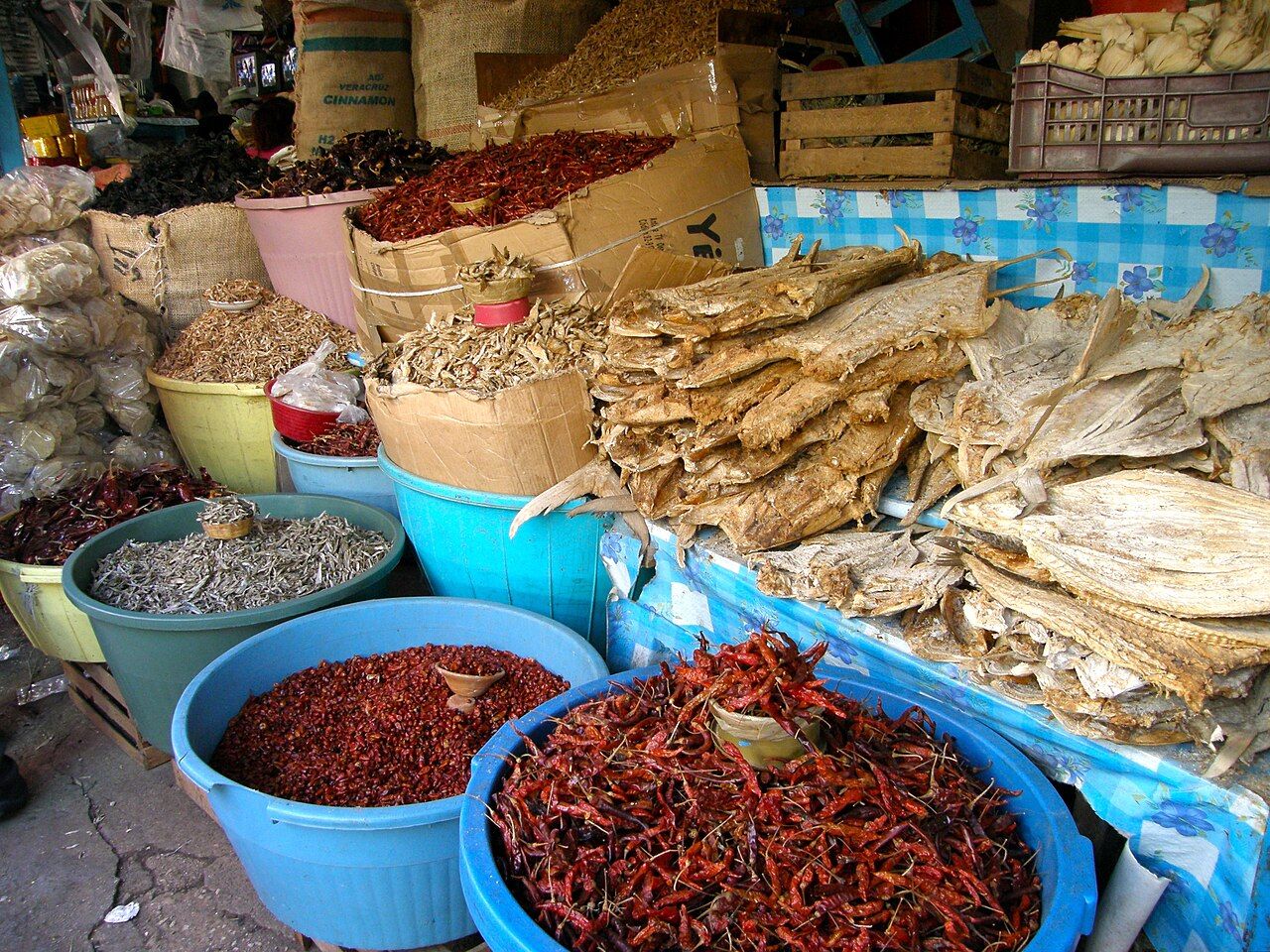
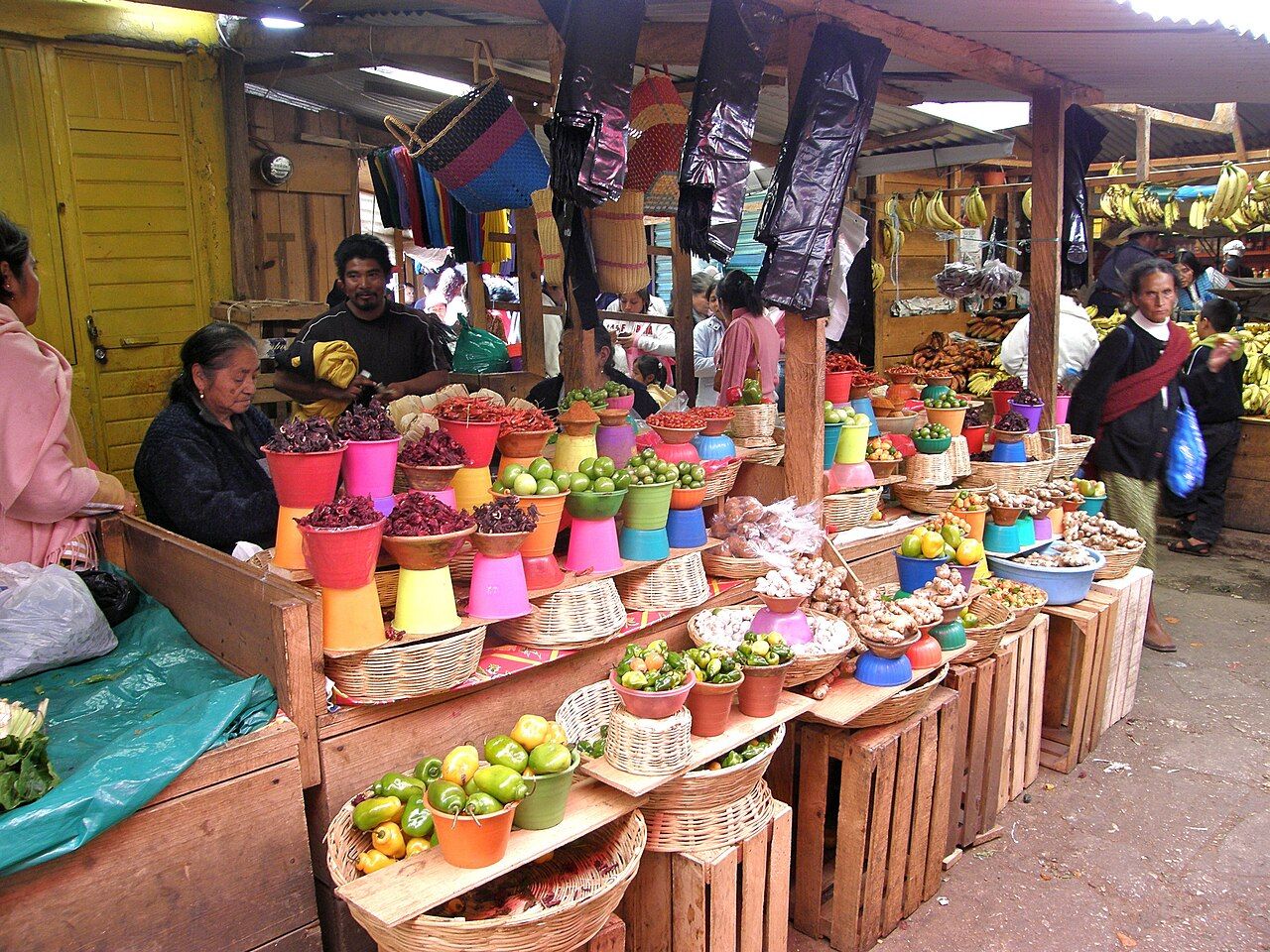
The highlands around San Cristóbal produce a wide range of crops, and the market shows them all. Look for heaps of maize, beans in many colours, potatoes, squash, carrots, cabbages and leafy greens. Fruit comes up from the warmer lowlands: bananas, mangoes, papayas, pineapples and citrus in season. Some stalls deal in dried goods: sacks of chillies in shades from scarlet to near black, dried shrimp, dried fish, spices, seeds and pulses.
Other sections are devoted to meat, poultry and live animals. Chickens and turkeys are sold alive in parts of the market, which can be a surprise for visitors used to supermarkets. Flowers are everywhere, from bundles of lilies and carnations to marigolds and greenery for altars, many of them grown in the greenhouses of Zinacantán. There are also stalls selling herbs and medicinal plants, candles, incense, clay pots, baskets and household goods.
 Shot by darij · licence CC BY (source file)

The people who come in from the villages
A large share of the sellers are Tzotzil and Tzeltal Maya women and families from the communities around San Cristóbal, including San Juan Chamula, Zinacantán and many others further out. Some sell vegetables, flowers or eggs from their own land; others are traders who buy in bulk and sell on. You will hear Tzotzil and Tzeltal spoken alongside Spanish, and see the distinct clothing of different villages: the dark wool skirts of Chamula, the embroidered purple and blue shawls of Zinacantán and many more.
For many of these families, the market is a source of essential income and the main point of contact with the town. Remember that you are a visitor in their workplace, not at a show put on for you.
Also in the valley: Backstrap looms and the textiles of the highlands
Photography manners
The market is visually rich, and the temptation to photograph everything is strong. Restraint matters here more than almost anywhere in town. Many people from the highland communities do not want to be photographed, for reasons ranging from simple privacy to long experience of being treated as a curiosity. Some find it offensive.
- Ask before you photograph any person, and accept a refusal without argument.
- Do not take pictures of people from a distance or with a long lens to get around asking.
- Photographs of produce, flowers and stalls are generally fine, but a friendly word to the seller first is still good manners.
- If someone asks for payment in return for a photograph, either pay or put the camera away.
The guide to Tzotzil, Tzeltal and how to be a guest goes further into these questions, along with greetings that are appreciated.
Shopping and eating
Buying a little is the best way to take part. Fruit, bread, nuts and snacks make easy purchases for a day's walking, and a bunch of flowers or a few candles can be a good gift if you are visiting someone. Prices are generally fixed for staple foods; there is little point in haggling over a few tomatoes. Carry small notes and coins, as sellers rarely have change for large denominations.
Food stalls inside and around the market sell breakfasts, tamales, soups and other local dishes, mostly to traders and shoppers rather than visitors. Look for busy stalls where food is cooked fresh in front of you. Drink bottled or purified water, and peel fruit if your stomach is sensitive.
Remember that you are a visitor in their workplace, not at a show put on for you.
Practical tips for an early visit
San Cristóbal sits at about 2,200 metres, and dawn is the coldest time of day. Dress warmly, with a jacket and closed shoes; the floors can be wet and uneven, especially in the rainy season. Keep your bag zipped and your phone in a front pocket, as the crowds make pickpocketing easy. Watch your feet around handcarts, which move fast and expect you to get out of the way.
The market runs every day, though the mood shifts through the week, and some days are busier than others. Opening times are early but not fixed, and parts of the market may close for cleaning, renovation or festivals.
Once you have finished, a walk back to the centre brings you past Santo Domingo and the textile stalls as they are being set up. It makes a natural morning: food market first, craft market after, and the old town waking up as you return. If you want to see where many of the market's flowers grow, the guide to Zinacantán and its greenhouses describes the valley a short ride west of town.
Camera work: Rod Waddington · licence CC BY-SA (source file); BIOLOGO JORGE AYALA · licence CC BY-SA (source file); Linkogecko · licence CC BY-SA (source file)


