
The andadores: walking the car-free streets of San Cristóbal
Two long pedestrian streets cross at the zócalo and carry most of the town's daily life. Here is how to walk them, when to go, and what the cobbles and the altitude ask of you.
- From the zócalo
- Starts at the zócalo
- Altitude
- In town
- Getting there
- Start at the zócalo on foot
- Bring
- Grippy shoes, a warm layer, small change
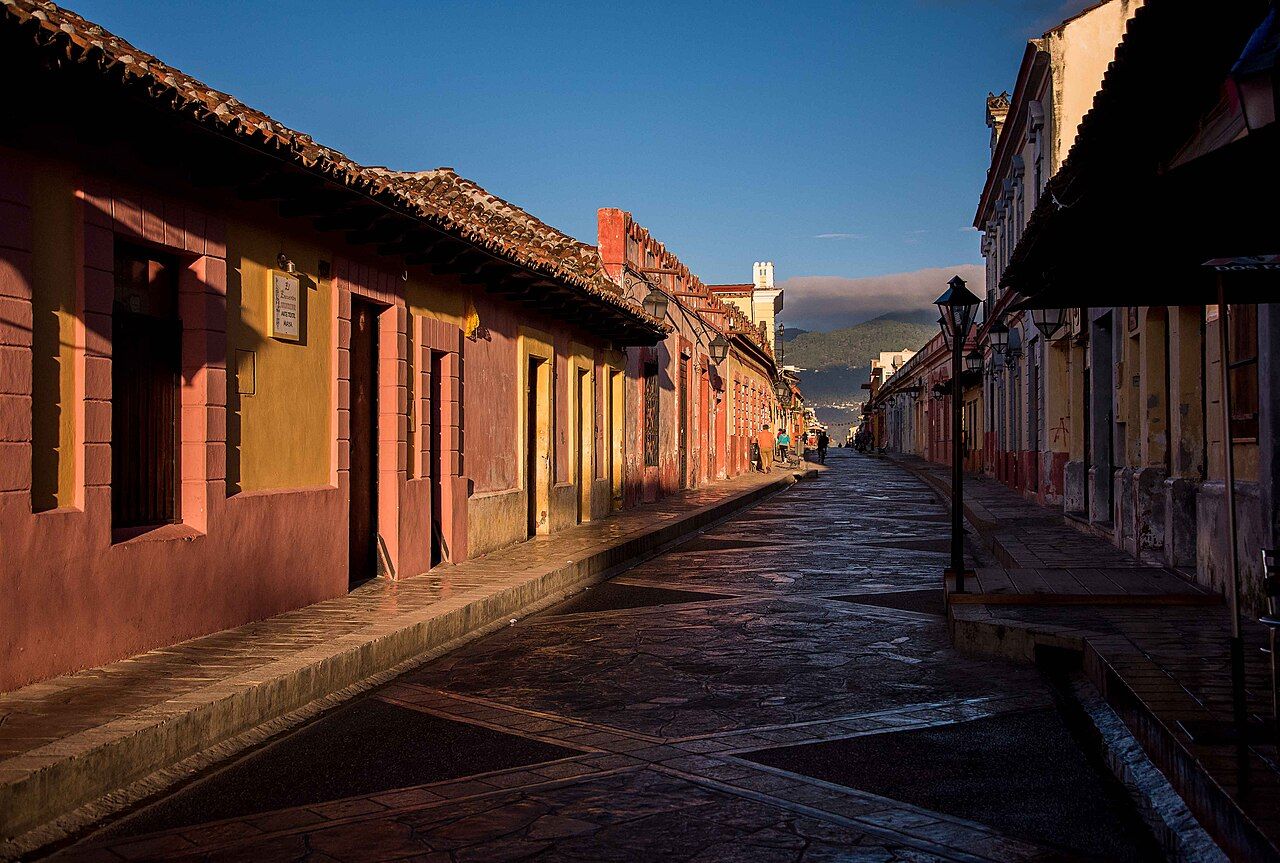 Shot by Rod Waddington · licence CC BY-SA (source file)

San Cristóbal de las Casas was laid out on a grid, and for most of its history that grid belonged to mules, carts and later cars. Over the last few decades the town closed several central streets to traffic, and these andadores, as the walking streets are called, have become the spine of the place. They are where you buy bread in the morning, where families stroll after dark, and where most visitors spend more hours than they planned.
Two routes matter most. One runs east from the zócalo along Real de Guadalupe towards the hill church of Guadalupe. The other runs north and south through the centre, linking the Santo Domingo area, the cathedral and the old Arco del Carmen; part of it is often called the Andador Eclesiástico because of the churches strung along it. Between them, a few short connecting blocks are also closed to cars or quiet enough to feel that way.
Real de Guadalupe, from the plaza to the hill
Real de Guadalupe begins a block from the zócalo and heads straight for the Cerro de Guadalupe, so the church on the hill is always in front of you as you walk east. The western stretch is the busiest: low colonial houses painted ochre, brick red, sky blue and pale green, wooden balconies, iron window grilles and deep doorways that open onto courtyards. Many of those courtyards now hold businesses, and the street changes character every few doors.
As you go further east the crowds thin, the facades get plainer and the street feels more like a neighbourhood again. Look up at the roofs: the clay tiles, the overhanging eaves and the rain gutters are part of what keeps the old houses dry in the wet season. Near the end you reach the foot of the staircase that climbs to Guadalupe, described in the story on the two hill churches, and from there the view back down the street shows how straight the old grid really is.
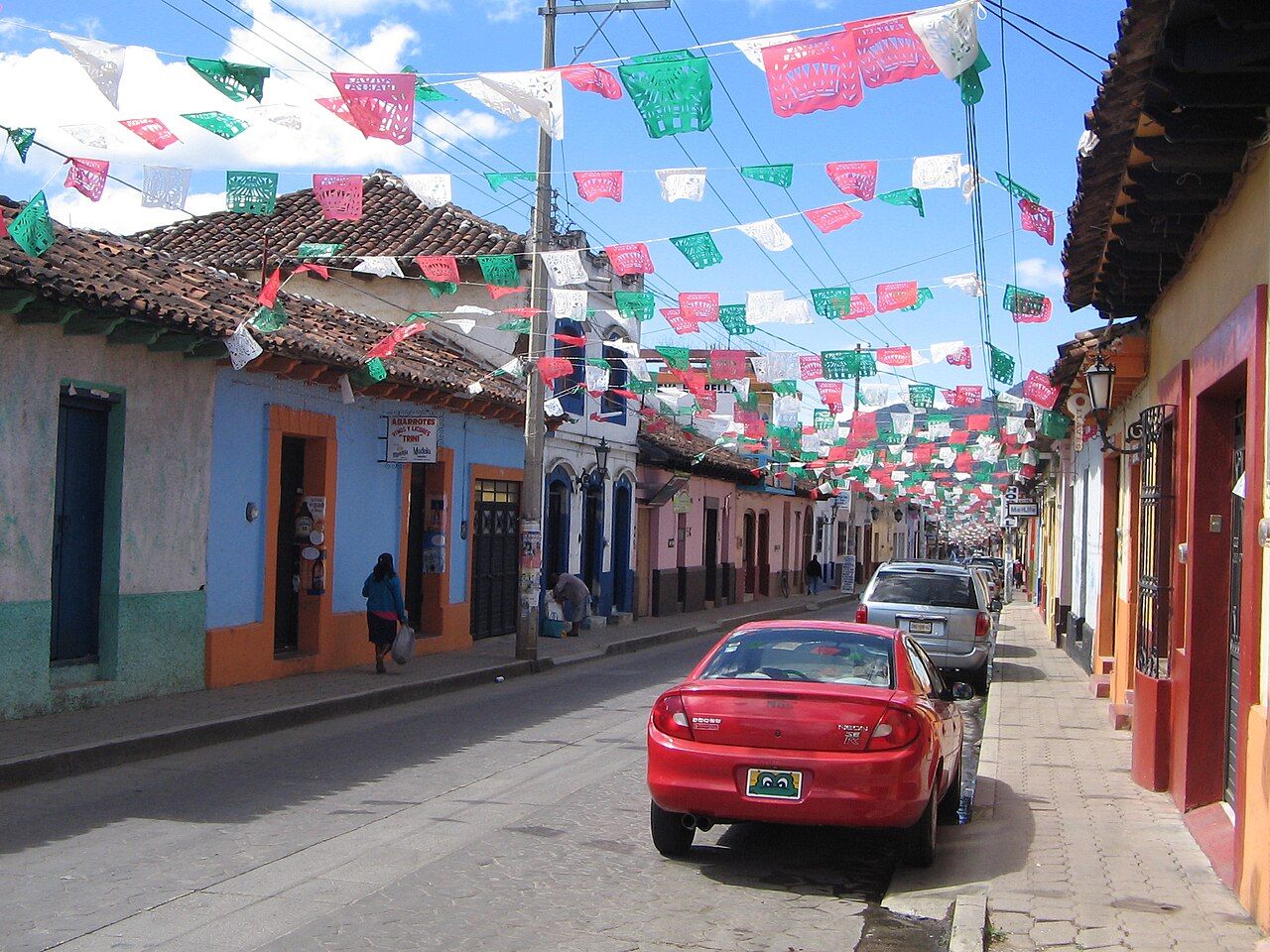 Shot by Rey Cometa · licence CC BY-SA (source file)

Feast days change the street. Around the celebration of the Virgin of Guadalupe in December, Real de Guadalupe fills with pilgrims, runners carrying torches, stalls and fireworks, and the walk to the hill becomes slow going. If you want the quiet version, come early on an ordinary weekday.
The north-south andador and its churches
The other main walking route crosses the centre from north to south. Heading south from the zócalo, Andador Miguel Hidalgo runs past white and cream facades towards the tall brick-red tower of the Arco del Carmen, a late seventeenth-century arch that once belonged to a convent and marked the edge of the old town. The arch is the obvious landmark to walk towards, and the church of El Carmen stands beside it.
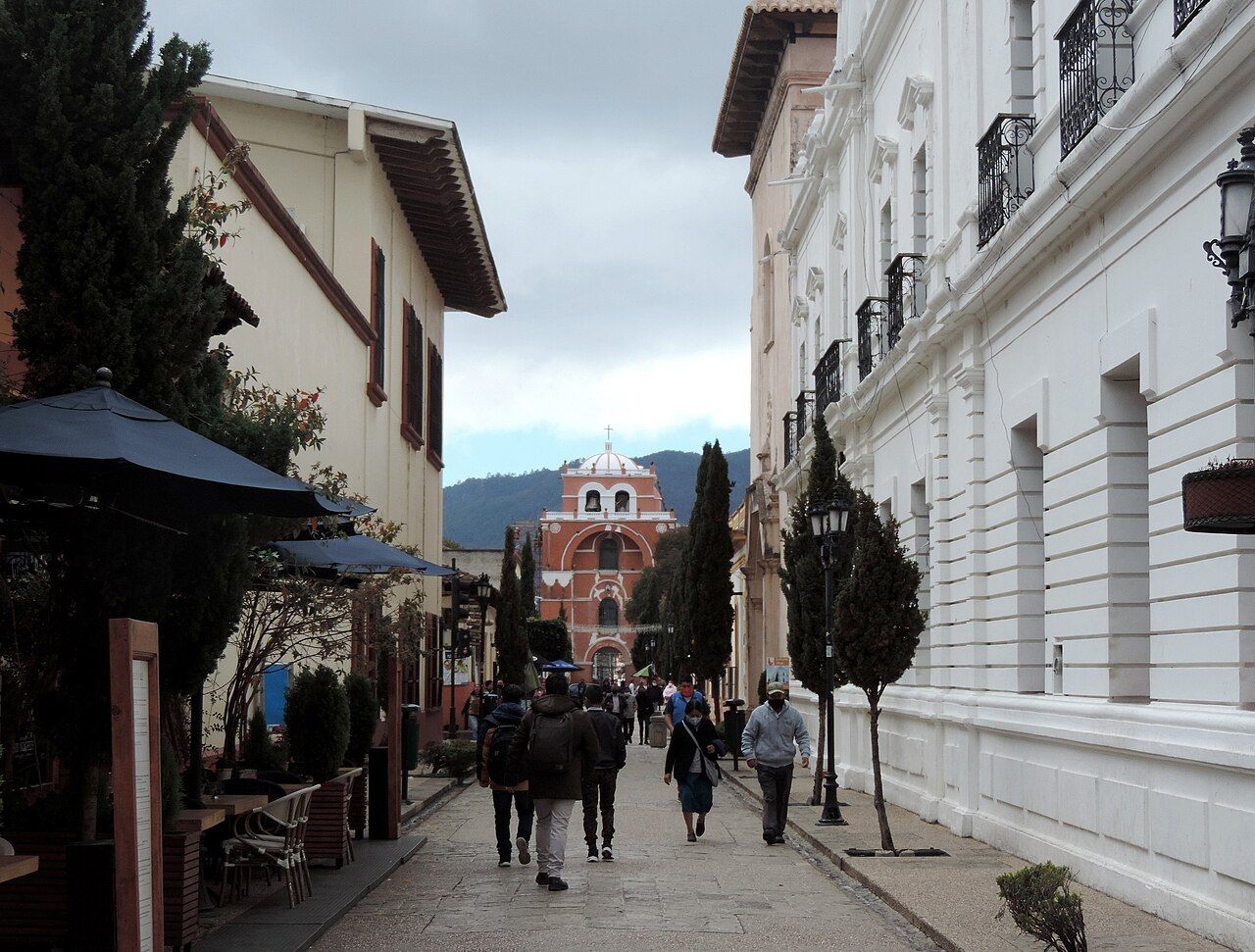 Shot by Globetrotteur17... Ici, là-bas ou ailleurs · licence CC BY-SA (source file)

North of the plaza, the route takes you past the cathedral and on towards Santo Domingo, where the open-air textile stalls begin. That end of town is covered in detail in the guide to Santo Domingo and the textile market, and it makes a natural pairing with a walk along the andador: one long, flat line from the craft market in the north to El Carmen in the south, with the cathedral and the zócalo halfway.
Parallel streets matter too. Some, such as Calle General Utrilla, still carry traffic, and the contrast is useful: the moment you step off an andador, you are back on narrow pavements with cars passing close.
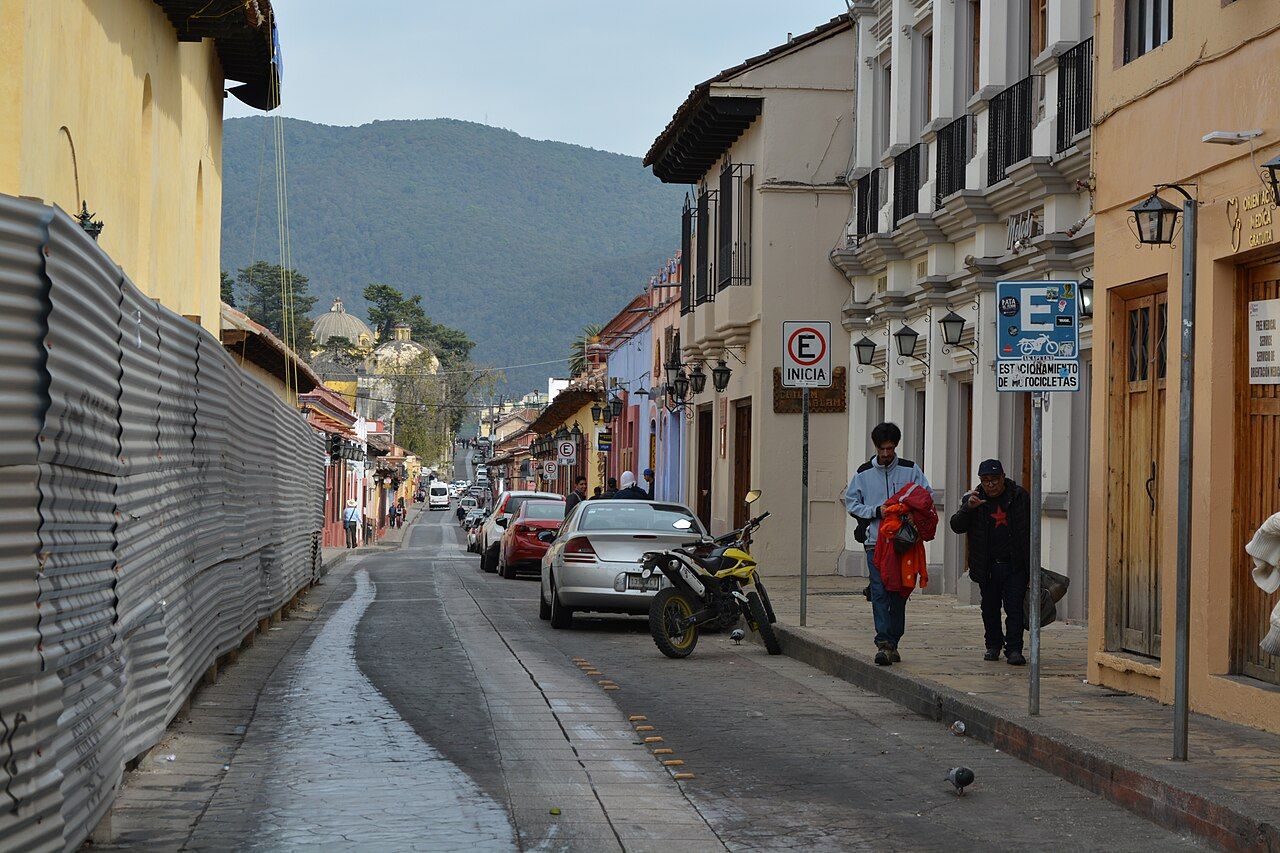 Shot by ProtoplasmaKid · licence CC BY-SA (source file)

Also in the valley: The cathedral and the zócalo, the town's front room
The rhythm of a day on the andadores
The walking streets have three distinct moods. Early in the morning they are almost empty: shutters still down, sweepers working, the light low and golden across the facades. This is the time for photographs of the buildings themselves, and for noticing details such as carved stone door frames, old house numbers and the occasional painted sign from decades ago.
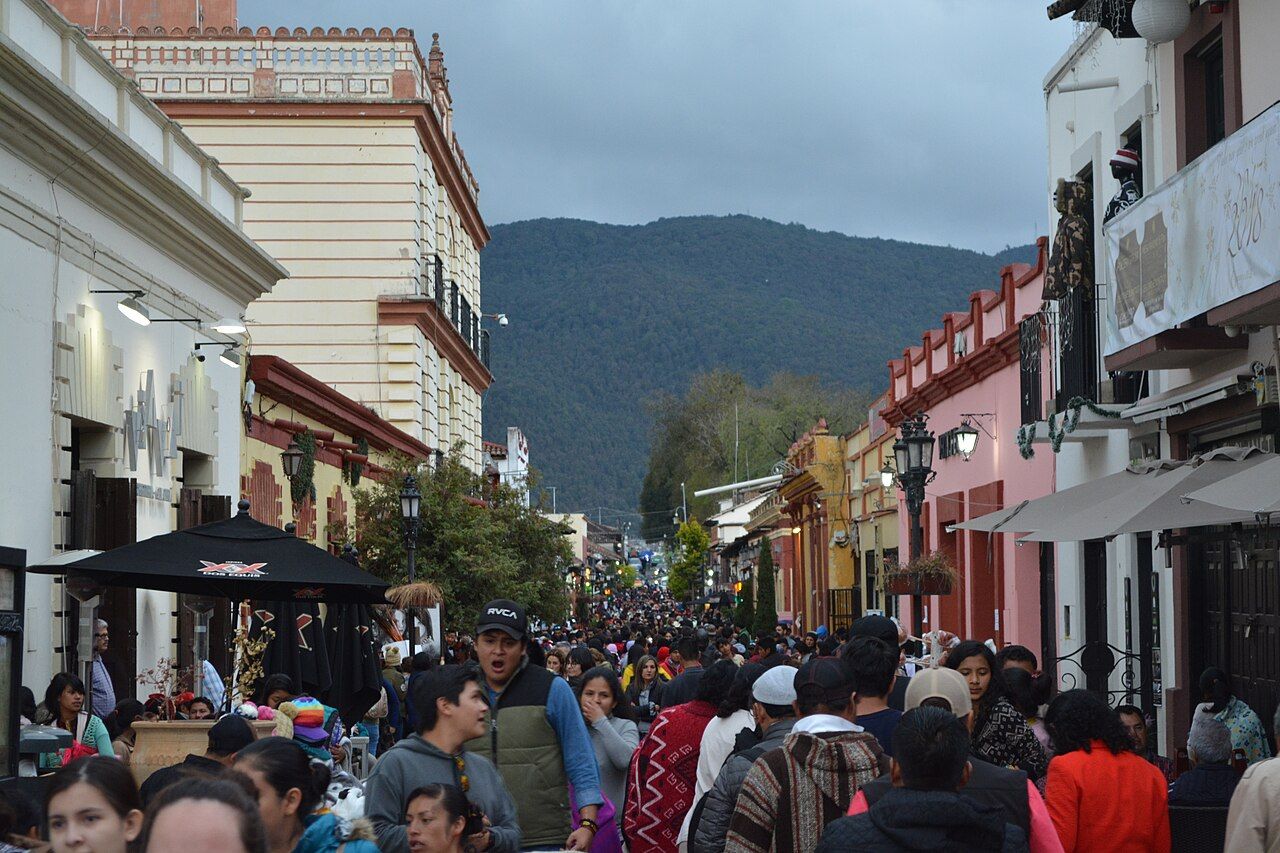
Late morning and afternoon bring the crowds. Visitors from Mexico and abroad mix with residents running errands, and vendors from the highland villages walk the length of the streets with textiles, belts, bracelets and small woven animals over their arms. Many of these sellers are women and children from Tzotzil and Tzeltal communities around the valley. A clear, polite "no, gracias" is enough if you are not buying; if you are, the story on being a good guest has notes on bargaining without squeezing people who earn very little.
 Shot by ProtoplasmaKid · licence CC BY-SA (source file)

Evening is when the andadores feel most alive. Families come out after work, musicians set up on corners, and the light from doorways spills over the cobbles. On weekends and holidays the central blocks can be packed shoulder to shoulder. Keep your phone and wallet in a front pocket or a zipped bag, as you would in any busy crowd.
Repeat it at a different time of day and it will feel like a different town.
Cobbles, rain and altitude
San Cristóbal sits at about 2,200 metres, and the thin air is noticeable for the first day or two, especially on the gentle climbs at either end of Real de Guadalupe. Walk slowly, drink water, and save the long hill staircases for your second or third day if you feel short of breath.
The surfaces need attention too. Some andadores are paved with smooth stone slabs that turn slippery after rain or when they have just been washed; others have older cobbles and uneven kerbs. Shoes with a decent grip matter more here than in most towns. The rainy season, roughly from late spring into autumn, usually brings afternoon downpours, and the gutters along the streets fill quickly. Many visitors carry a light rain jacket all year.
Temperature is the other surprise. Days can be warm in the sun, but the moment the sun drops behind the hills the air turns cold, and nights are chilly most of the year. A warm layer in your bag makes an evening stroll far more pleasant. The guide to altitude and cold nights covers the seasons in more detail.
Walking with care and curiosity
The andadores are public streets, but many of the houses along them are still homes, and the doorways you peer into may lead to someone's courtyard. Look, but do not wander in uninvited. When photographing street life, aim at the architecture rather than at individuals, and ask before taking a picture of anyone, particularly vendors from the highland communities, many of whom prefer not to be photographed. Accept a refusal with good grace.
A good first walk takes an hour or two without stopping: from the zócalo east along Real de Guadalupe to the foot of the Guadalupe stairs, back to the plaza, south to the Arco del Carmen, and then north past the cathedral to Santo Domingo. Repeat it at a different time of day and it will feel like a different town.
Street layouts, closures and pedestrian zones change from time to time, and some blocks reopen to traffic during works or events.
Camera work: BIOLOGO JORGE AYALA · licence CC BY-SA (source file); Linkogecko · licence CC BY-SA (source file); Anthony G. Reyes · licence CC BY-SA (source file)


