
Amber, Maya medicine and the house of the jaguar
Three small museums show different sides of the highlands: fossil resin mined in the north of Chiapas, the healing traditions of Maya communities, and a house built around a lifetime of research.
- From the zócalo
- Ten to twenty minutes on foot
- Altitude
- In town
- Getting there
- All three are walkable from the centre
- Bring
- Patience for opening hours; reading glasses
 Shot by Adam Jones from Kelowna, BC, Canada · licence CC BY (source file)

San Cristóbal's attractions are mostly outdoors: streets, churches, markets, hills. On a wet afternoon, though, or when you want to understand what you have been seeing, its museums are well worth a few hours. Three in particular stand out for their focus on the region: the amber museum in the former convent of La Merced, the museum of Maya medicine on the northern side of town, and Na Bolom, a house-museum with a garden on the eastern side of the centre.
None is large, and each can be seen in an hour or so.
The amber museum and La Merced
Chiapas is one of the world's notable sources of amber, the fossilised resin of ancient trees. Most of it comes from mines in the mountains of the north of the state, in the area around Simojovel, where it has been dug out for centuries. Chiapas amber is generally dated to tens of millions of years old, and some pieces contain insects, leaves or other small organisms trapped in the resin when it was still liquid.
The Museo del Ámbar de Chiapas occupies part of the former convent of La Merced, west of the centre. The building itself is worth seeing, with its thick walls and courtyard. Inside, displays explain how amber forms, how it is mined and how it is worked, and show raw pieces, inclusions and carved and polished objects, some of them remarkable pieces of craftsmanship.
A visit is also useful preparation if you are thinking of buying amber in town. Amber is widely sold in San Cristóbal, and so are imitations made of plastic, glass or younger resins. The museum explains, in general terms, how real amber behaves. If you are buying something valuable, take your time and be sceptical of bargains.
The museum of Maya medicine
The Museo de la Medicina Maya, north of the centre, presents the healing traditions of the Maya communities of the highlands. It is organised by indigenous healers themselves, which gives it a different perspective from many museums: it is a statement of living knowledge rather than a display of a vanished past.
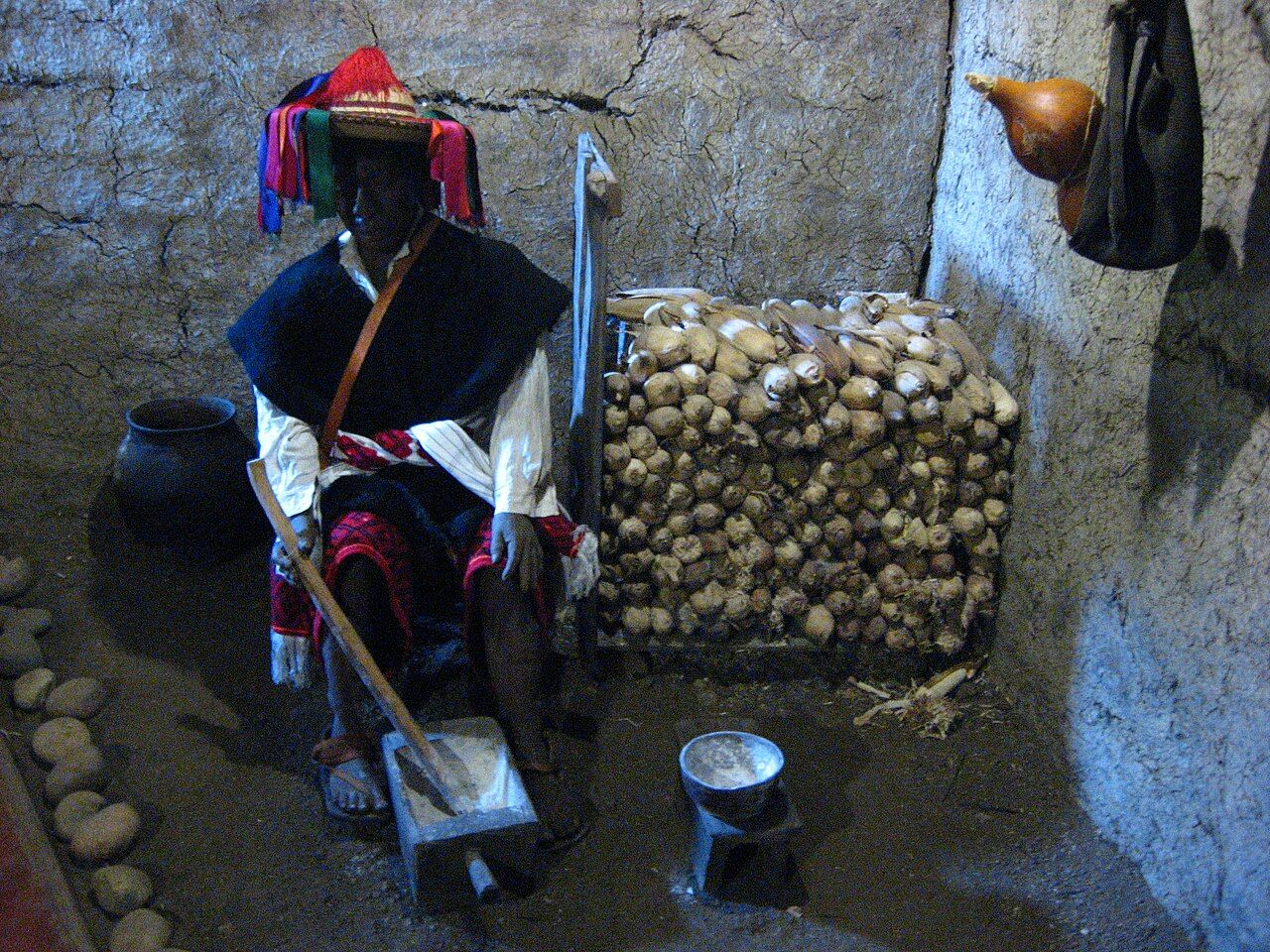
Exhibits cover the work of different kinds of traditional practitioners, including healers who pray and read the pulse, midwives, bonesetters and herbalists. Dioramas with life-size figures show scenes such as a healing ceremony, a birth and daily life in a highland home. Explanations describe the role of prayer, candles, plants and offerings in curing, and the close connection between health, community and the sacred.
 Shot by hectorgarcia · licence CC BY-SA (source file)

The museum has a garden of medicinal plants, where you can see some of the herbs the healers use. Plants that help in skilled hands can harm in careless ones, so admire them rather than experimenting. The museum also helps explain some of what you may see in village churches, a subject approached more fully in the guide to San Juan Chamula with respect.
Also in the valley: Santo Domingo and the textile stalls around it
Na Bolom, the house of the jaguar
Na Bolom, whose name is usually translated as the house of the jaguar, was the home of the Danish archaeologist Frans Blom and the Swiss photographer and campaigner Gertrude Duby Blom. The couple settled in San Cristóbal in the mid-twentieth century and devoted decades to the study of Maya cultures, the Lacandón rainforest and its people, the Lacandón Maya.
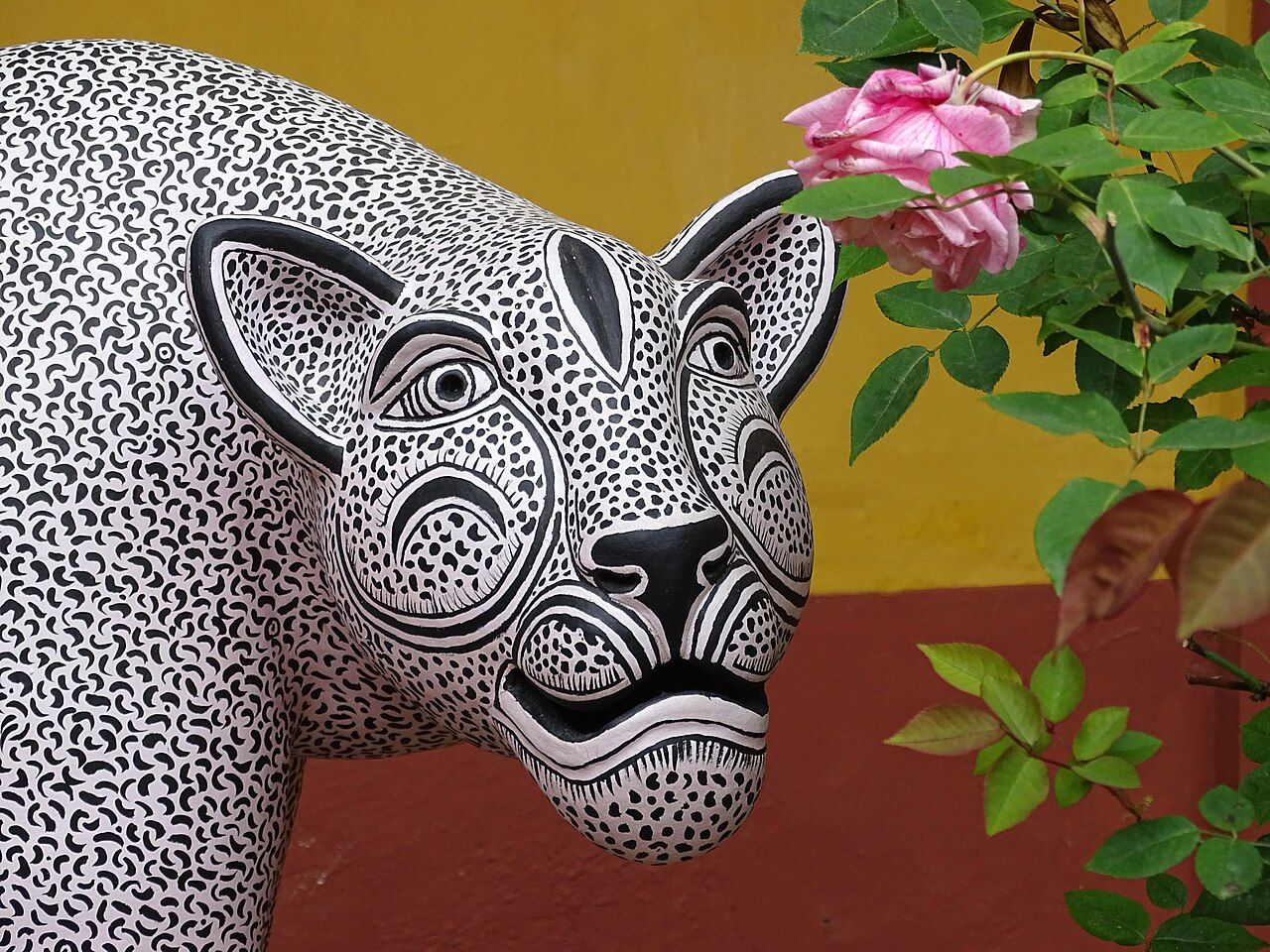
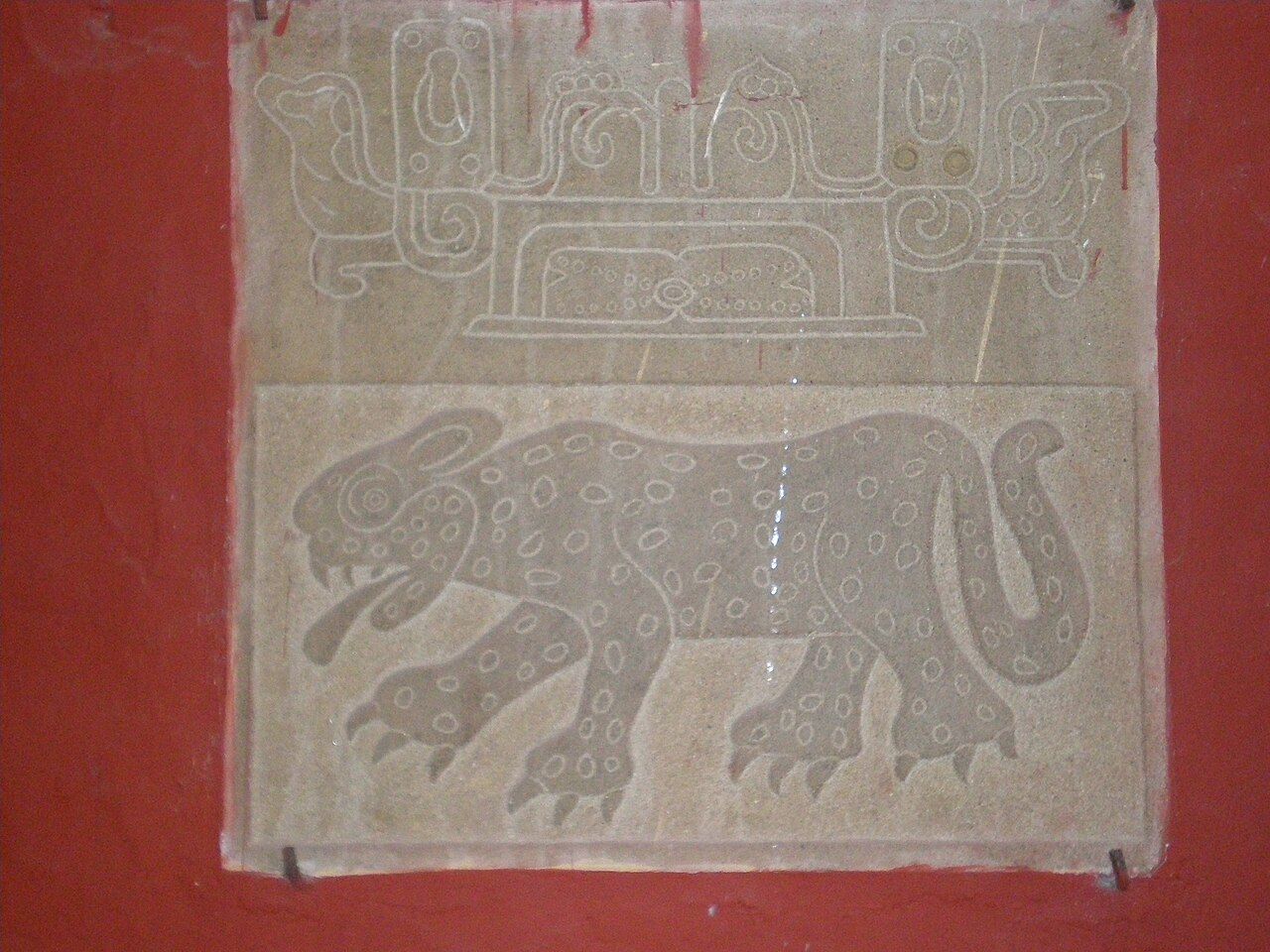
The house, a nineteenth-century building arranged around courtyards, is now a museum. Rooms display archaeological pieces, objects of everyday life and religious art, along with the couple's library and personal belongings. Photographs taken by Gertrude Duby Blom over many years, particularly of Lacandón communities, are among the most striking parts of the collection. Jaguar images appear throughout, from carved stone panels to painted sculptures in the courtyards.
 Shot by Éclusette · licence CC BY (source file)

The garden at Na Bolom
Behind the house lies a large garden, laid out over years with fruit trees, flowers, vegetables and native plants. It has long been part of the place's identity, reflecting Gertrude Duby Blom's concern for the forests of Chiapas, which were being cut down at an alarming rate during her lifetime. Walking through it, you get a sense of how the house worked as both a home and a centre for research and conservation.
The garden is a peaceful place to sit after the museum rooms, and on a sunny day the contrast between its greenery and the old walls is lovely.
Planning your visits
The three museums are spread around the centre: La Merced and the amber museum to the west, Na Bolom to the east and the museum of Maya medicine to the north. Each is within walking distance of the zócalo, though the museum of Maya medicine is the furthest out, and the walk there passes through the busier streets north of the municipal market. A taxi is an easy alternative in the rain.
Seeing all three in one day is possible but tiring. A better plan is to fit one into each of several days, perhaps when afternoon rain sets in during the wet season. Combined with walks to Santo Domingo and the barrios around the centre, they give a fuller picture of the town and its region than the streets alone.
Respect and photography
Each museum sets its own rules about photography. Some allow photos without flash; others restrict them in certain rooms or entirely. Look for signs and ask staff if unsure. At the museum of Maya medicine in particular, remember that the knowledge on display belongs to living communities. Treat it with the same respect you would show in a church, and keep in mind that the healers it describes continue to practise in villages across the highlands. The guide to being a guest in the highlands has more on how to approach such questions.
Camera work: Rod Waddington · licence CC BY-SA (source file); BIOLOGO JORGE AYALA · licence CC BY-SA (source file); Linkogecko · licence CC BY-SA (source file)


