
The barrios: El Cerrillo, Mexicanos and the rest
Beyond the walking streets, San Cristóbal breaks into old neighbourhoods, each built around a church and a plaza, each with a patron saint, a feast day and, in some cases, a traditional trade.
- From the zócalo
- Ten to twenty minutes on foot
- Altitude
- In town
- Getting there
- Short walks out from the centre
- Bring
- Comfortable shoes and a town map
 Shot by Dge · licence CC BY-SA (source file)

To most visitors, San Cristóbal is the zócalo, the cathedral and the walking streets. To the people who live here, it is also a town of barrios: neighbourhoods with their own churches, plazas, saints and identities. Some barrios go back to the first years of the colonial town, when different groups were settled in separate districts; others grew up later as the town spread across the valley. Many kept a sense of being small communities within the larger town, and some are still associated with particular crafts or trades.
Exploring the barrios takes you away from the busiest streets into quieter blocks of low houses, small shops serving residents and plazas where children play in the evenings. It is one of the best ways to understand how the town actually works.
How the barrios came to be
When the Spanish founded the town in the valley of Jovel in the sixteenth century, the centre was reserved for Spanish settlers. Around it, separate neighbourhoods housed the indigenous allies and workers who had come with them or been brought in, including people from central Mexico. Each barrio grew around its own church, and the patron saint of that church gave the barrio its name and its main feast.
Over time, some barrios became known for the work their residents did. That pattern has faded with modern life, but echoes of it remain, and local people will still tell you which barrio is known for what. The names you hear most often include Mexicanos, El Cerrillo, Tlaxcala, Cuxtitali, San Ramón, La Merced, El Carmen, Santa Lucía and Guadalupe, among others.
Mexicanos, the oldest
The barrio of Mexicanos, on the north side of town, is generally described as the oldest in San Cristóbal. Its name recalls the Nahua people from central Mexico who arrived with the Spanish at the time of the conquest and were settled here. A neighbouring barrio, Tlaxcala, takes its name from another central Mexican people who allied with the Spanish.
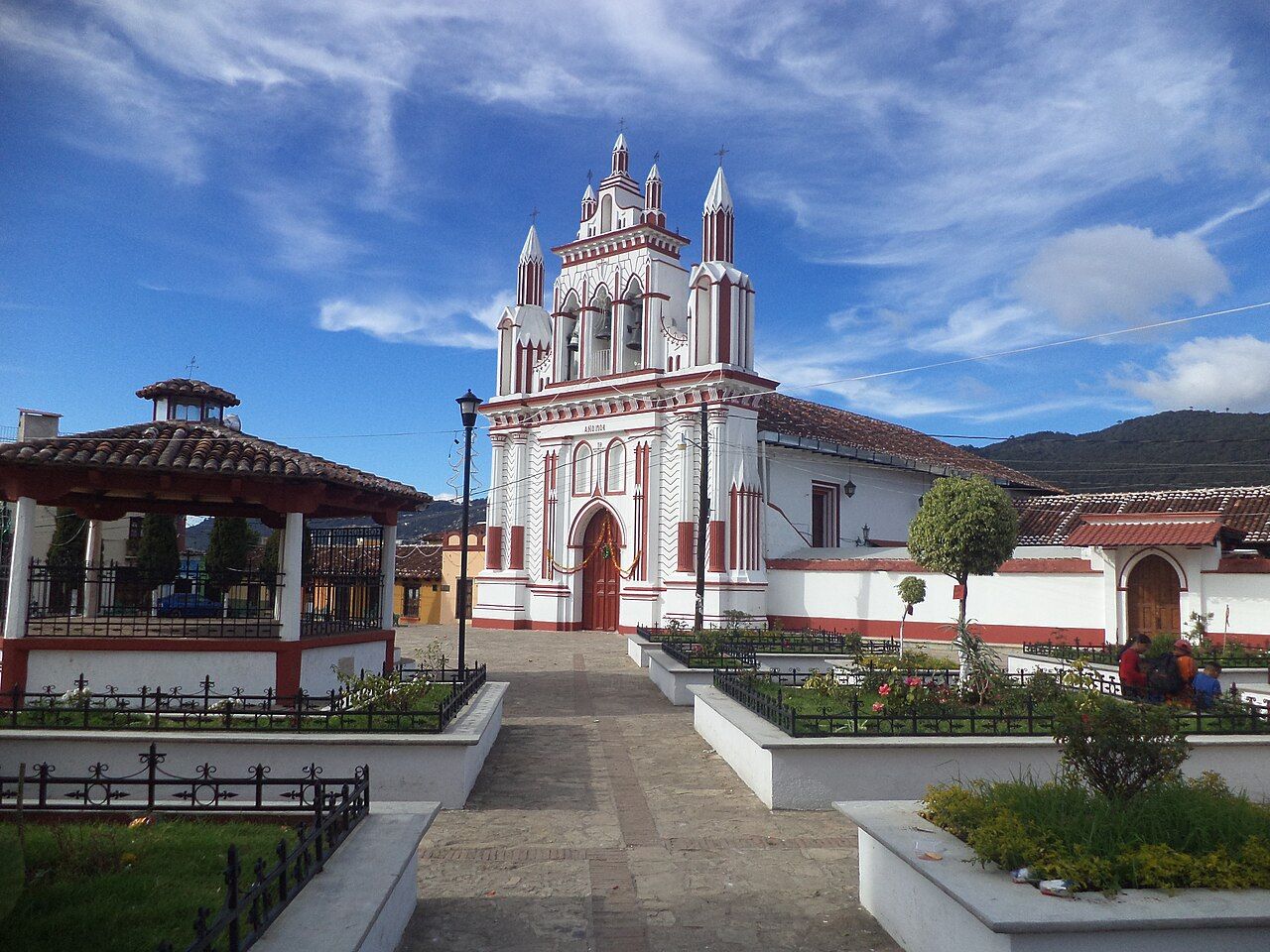
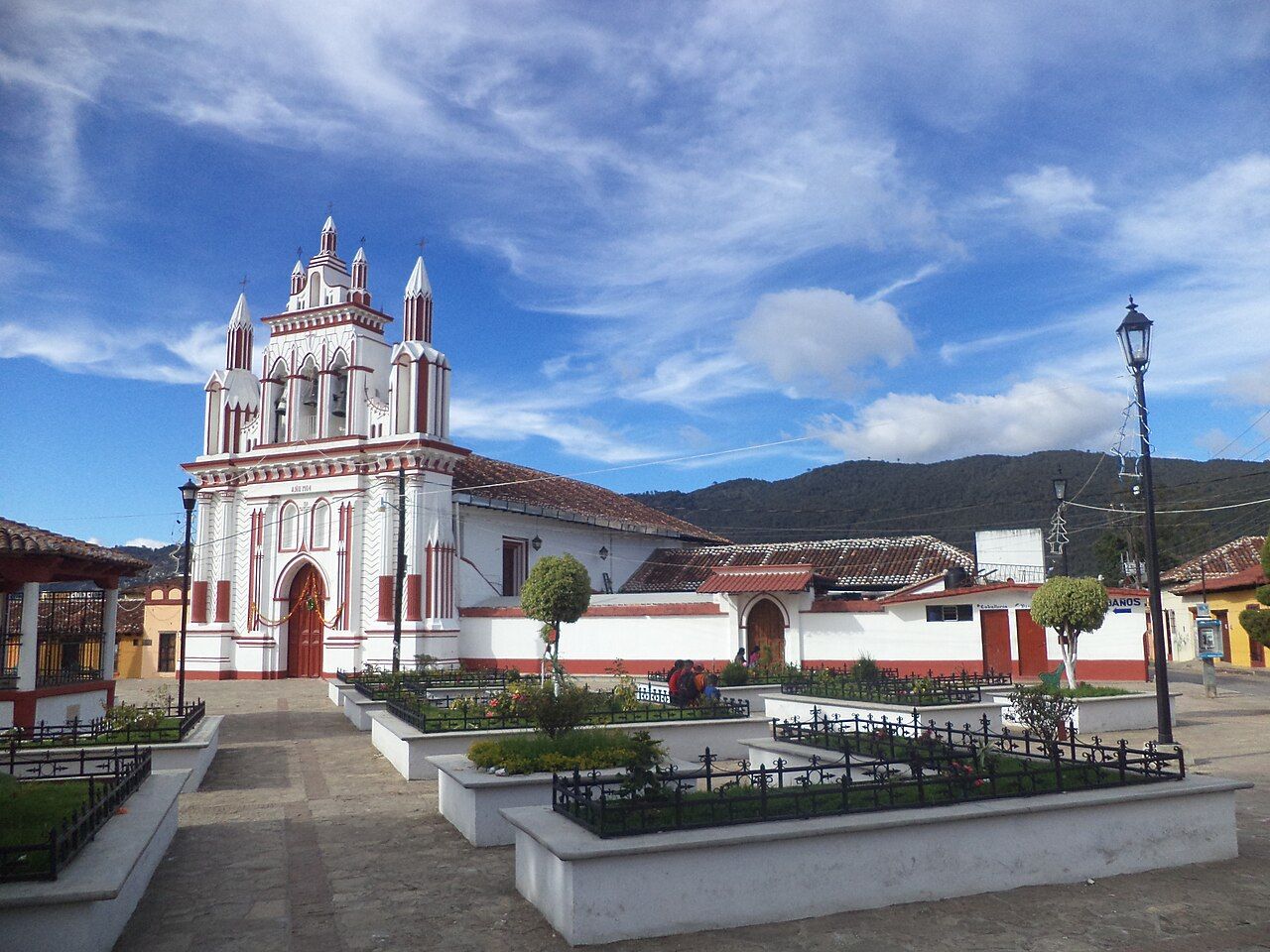
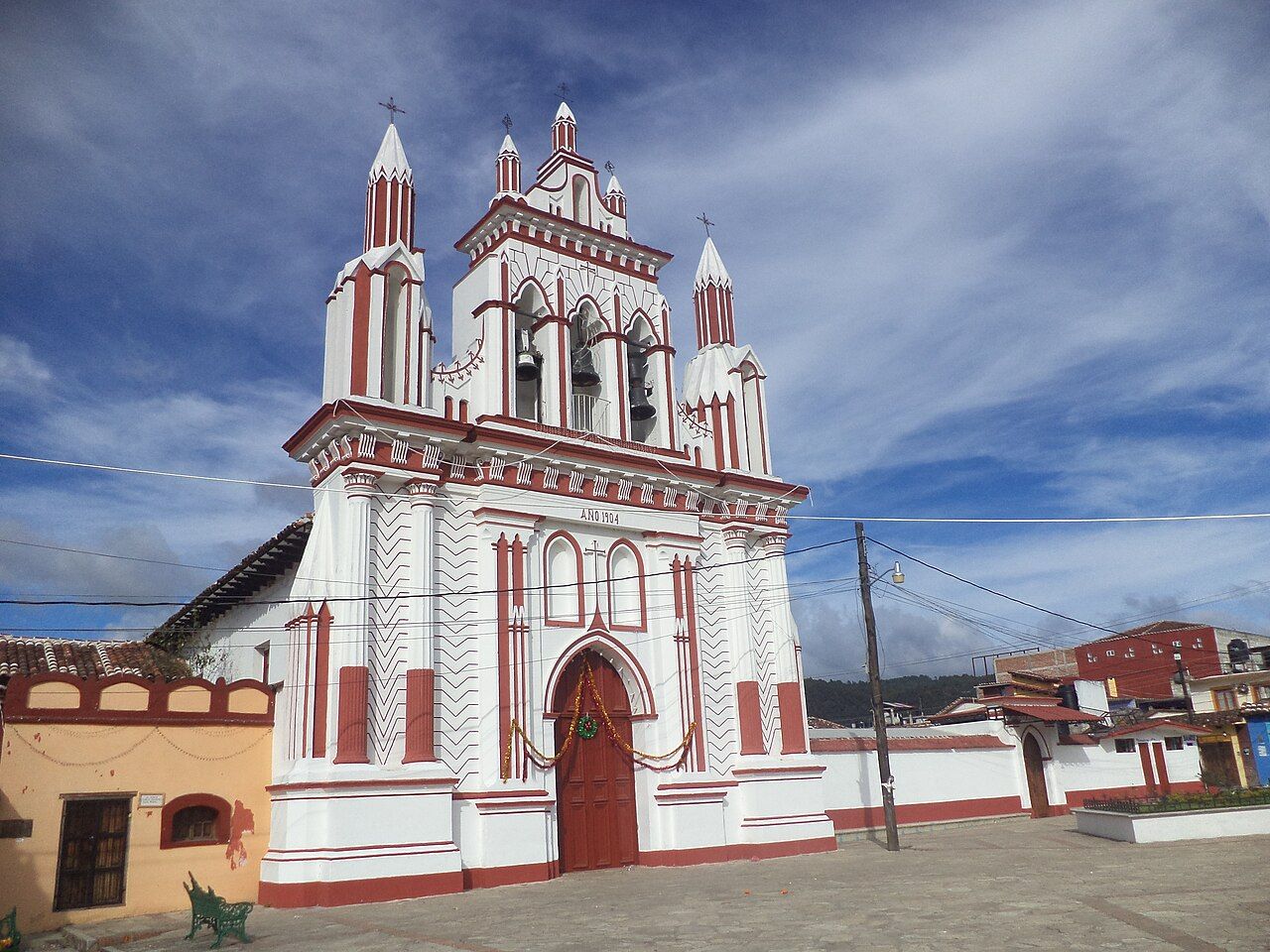
At the heart of Mexicanos is a quiet plaza with a small kiosk, gardens enclosed by iron railings, and the white and red church of the barrio. The facade is a striking piece of work, with slender pointed pinnacles, a bell gable and red trim on white walls; a date over the door shows that the present front is far younger than the barrio itself. On a sunny morning, with the forested hills behind, the plaza is one of the most peaceful places in town.
 Shot by Dge · licence CC BY-SA (source file)

El Cerrillo and its ironwork
El Cerrillo lies north of the centre, a short walk beyond Santo Domingo. The barrio has long been associated with blacksmiths and ironworkers, and the wrought-iron crosses, balconies and window grilles that you see all over San Cristóbal are part of that tradition. Look up as you walk the old streets: many of the balcony railings and grilles on colonial houses are the kind of work that came out of these workshops.
The barrio has its own church and plaza, and some workshops still turn out ironwork today, though the trade has changed and many residents now work in other jobs. Walking El Cerrillo gives a sense of a working neighbourhood that has kept its character. The streets leading to it from the textile market are covered in the guide to Santo Domingo and the market.
Also in the valley: The municipal market at dawn
Cuxtitali, San Ramón and other neighbourhoods
On the eastern edge of town, Cuxtitali has a long reputation for pork and cured meats, and residents still prepare sausages and other specialities in the traditional way. It is a more residential barrio, a bit further out, and worth the walk mainly if you are curious about the town beyond its tourist core.
Other barrios have their own stories. La Merced grew around the former convent of that name, which now houses a museum, described in the guide to amber, Maya medicine and Na Bolom. El Carmen centres on the church and arch at the southern end of the main walking street. Guadalupe climbs towards the hill church at the end of Real de Guadalupe, and San Cristóbal lies at the foot of the steep western hill. Each has its own plaza and church, and each feels slightly different.
Exact boundaries are not always clear to visitors, and the trades linked to some barrios are now more history than daily practice. If you are curious about a particular neighbourhood, residents are usually happy to tell you what it was once known for.
Feast days in the barrios
Every barrio celebrates the feast of its patron saint, and these celebrations are among the best ways to see the town's community life. Typical features include decorated church fronts, papel picado strung across the streets, brass bands, processions carrying the saint's image, food stalls and fireworks, often including tall frames of rockets that are set off in the evening. Some feasts last several days.
Because each barrio has its own saint, there is a feast happening somewhere in town at many points in the year. If you come across a celebration, you are generally welcome to watch respectfully. Keep a safe distance from fireworks, give way to processions, and ask before photographing people. The guide to pox, candles and feast days describes the festive year more broadly.
 Shot by Dge · licence CC BY-SA (source file)

Walking the barrios
The barrios are best explored on foot, at an easy pace, with a map. A good loop from the centre heads north past Santo Domingo and the municipal market to El Cerrillo, continues to Mexicanos, and returns south through quieter residential streets. Another route heads east along Real de Guadalupe and then out towards Cuxtitali. Allow a morning for either.
These are residential areas, so keep noise down, be discreet with cameras, and remember that people's front doors open directly onto the pavement. Pavements in outlying barrios can be narrow and uneven, and some streets carry fast traffic, so take care. As in any town, stick to daylight hours when exploring areas you do not know.
Above all, take your time. The barrios reward slow walking: a church door left open, an old iron cross on a rooftop, a neighbourhood plaza filling up as the light fades. They show a side of San Cristóbal that the busy centre sometimes hides.
Camera work: Rod Waddington · licence CC BY-SA (source file); BIOLOGO JORGE AYALA · licence CC BY-SA (source file); Linkogecko · licence CC BY-SA (source file)


